
 EN
EN

The transformation of educational paradigms from traditional lecture-based instruction to inquiry-based and student-led learning represents one of the most significant shifts in modern pedagogy. At the heart of this transformation lies the strategic deployment of advanced teaching instruments that empower students to explore, question, and construct knowledge through direct engagement with scientific phenomena. These sophisticated educational tools do not merely supplement traditional teaching methods—they fundamentally reshape the learning environment by placing investigative power directly into students' hands, enabling them to transition from passive recipients of information to active constructors of understanding through empirical exploration and analytical reasoning.
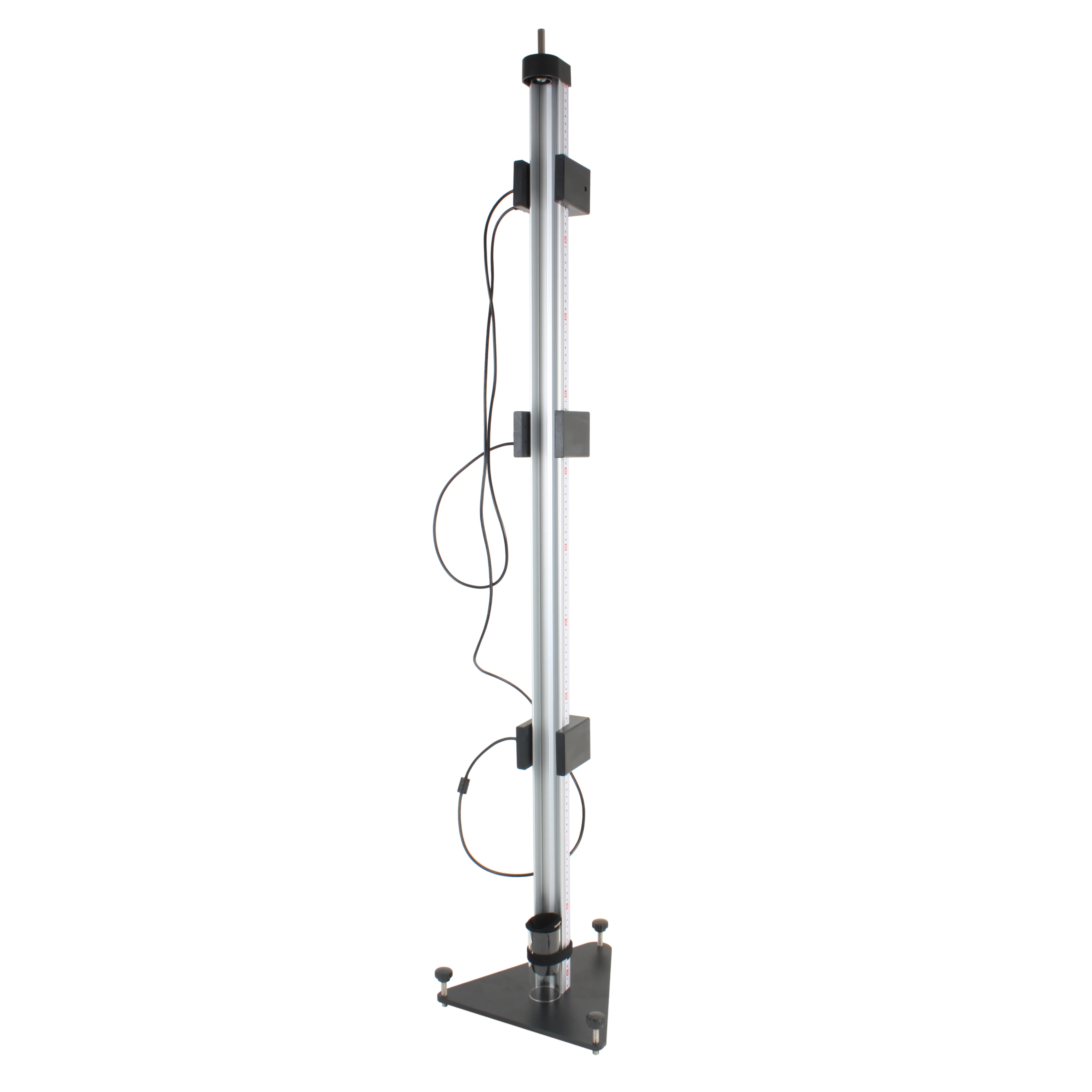
Advanced teaching instruments facilitate inquiry-based learning by providing students with the precise measurement capabilities, reproducible experimental conditions, and quantifiable data necessary to test hypotheses and draw evidence-based conclusions independently. Unlike conventional demonstration equipment that positions teachers as sole operators, these instruments are designed with intuitive interfaces, safety features, and robust construction that make them accessible for student manipulation while maintaining scientific accuracy. This accessibility is crucial because inquiry-based pedagogy depends on students formulating their own questions, designing investigative approaches, collecting empirical evidence, and constructing explanations—processes that require direct interaction with measurement tools rather than passive observation of teacher-conducted demonstrations.
The Pedagogical Architecture of Inquiry-Based Learning Environments
Foundational Principles That Advanced Teaching Instruments Must Support
Inquiry-based learning operates on the principle that knowledge construction occurs most effectively when learners engage directly with phenomena, formulate testable questions, and use systematic investigation to build understanding. Advanced teaching instruments serve this pedagogical model by providing the technical infrastructure for authentic scientific inquiry within educational settings. These instruments must deliver measurement precision sufficient for students to observe meaningful patterns, repeatability that allows multiple trials for verification, and durability that withstands the exploratory nature of student-led investigation. The design philosophy behind effective advanced teaching instruments recognizes that educational contexts require equipment balancing scientific capability with practical usability for learners at various developmental stages.
The facilitation mechanism operates through several interconnected pathways. First, advanced teaching instruments externalize abstract concepts by making invisible phenomena measurable and observable, transforming theoretical constructs into tangible experiences that students can manipulate and quantify. Second, these instruments democratize investigative authority by enabling students to generate their own data rather than relying solely on textbook assertions or teacher demonstrations. Third, they create authentic cognitive demand by requiring students to make methodological decisions about measurement approaches, data collection strategies, and analytical interpretations. This cognitive engagement with both the subject matter and the investigative process represents the essence of inquiry-based learning that advanced teaching instruments uniquely enable.
Transitioning Classroom Authority From Teacher-Centered to Student-Driven Investigation
The presence of advanced teaching instruments fundamentally alters the distribution of epistemic authority within learning environments. When students have direct access to measurement and observation tools, the teacher's role evolves from information provider to facilitator of investigative processes. This shift is not merely philosophical but operationally embedded in how advanced teaching instruments function within inquiry-based pedagogies. Students gain agency to test their own hypotheses, challenge prevailing explanations with empirical evidence, and construct understanding through iterative cycles of prediction, testing, and refinement. The instruments provide the evidentiary foundation that legitimizes student-generated knowledge claims, creating an educational culture where conclusions must be justified through reproducible observations rather than accepted based on authority alone.
This transition requires that advanced teaching instruments possess specific design characteristics that distinguish them from research-grade laboratory equipment. They must incorporate safety mechanisms that protect novice users without compromising investigative authenticity, provide clear measurement displays that students can interpret without extensive technical training, and offer experimental configurations that can be modified to accommodate diverse investigative questions. The balance between accessibility and scientific validity is crucial—instruments that are too simplified may fail to generate meaningful data, while those that are overly complex may frustrate student-led exploration. Effective advanced teaching instruments navigate this tension by maintaining measurement integrity while presenting interfaces that invite rather than intimidate student interaction.
Mechanisms Through Which Advanced Teaching Instruments Enable Student-Led Exploration
Providing Quantitative Feedback That Validates or Refutes Student Hypotheses
Student-led learning depends critically on the availability of objective feedback mechanisms that help learners assess the validity of their investigative approaches and conceptual models. Advanced teaching instruments fulfill this function by generating quantitative data that students can compare against their predictions, enabling them to identify discrepancies that stimulate deeper inquiry. When students predict that doubling the drop height will double the impact force, for example, precise measurement instruments reveal the actual relationship, prompting investigation into why their initial model was incomplete. This feedback loop—prediction, measurement, comparison, refinement—constitutes the core mechanism through which inquiry-based learning produces conceptual change, and it is entirely dependent on instruments capable of delivering reliable, interpretable data.
The timing and clarity of instrumental feedback significantly influence learning outcomes in student-led contexts. Advanced teaching instruments that provide immediate, unambiguous measurements enable students to maintain cognitive connection between their experimental manipulations and observed outcomes. Delayed or ambiguous feedback disrupts the investigative momentum and makes it difficult for students to attribute results to specific variables they controlled. Modern advanced teaching instruments increasingly incorporate digital displays, data logging capabilities, and graphical output that make quantitative relationships immediately visible, supporting the rapid hypothesis-testing cycles characteristic of productive inquiry-based learning. This immediacy is particularly crucial when students are working independently or in small groups without continuous teacher mediation.
Supporting Iterative Investigation and Experimental Design Skills
Authentic scientific inquiry rarely proceeds linearly from question to definitive answer. Instead, it involves iterative cycles of questioning, testing, analyzing, and refining both methods and understanding. Advanced teaching instruments facilitate this iterative process by being sufficiently robust and flexible to withstand repeated use with varied configurations. Students developing experimental design competencies need instruments that allow them to modify variables systematically, repeat trials to assess measurement consistency, and explore boundary conditions where phenomena behave unexpectedly. The durability and reconfigurability of advanced teaching instruments directly enable the trial-and-error exploration essential to developing both conceptual understanding and methodological sophistication.
Furthermore, advanced teaching instruments support the development of metacognitive awareness about measurement validity and experimental control. When students encounter unexpected results, well-designed instruments help them distinguish between measurement error, uncontrolled variables, and genuine phenomena requiring explanation. Features such as calibration indicators, measurement range specifications, and consistency checks embedded in advanced teaching instruments provide scaffolding for students learning to evaluate data quality critically. This metacognitive dimension is essential for student-led learning because independent investigators must develop internal standards for assessing evidence reliability rather than relying on external authorities to validate their findings.
Design Characteristics That Distinguish Inquiry-Enabling Teaching Instruments
Balancing Scientific Authenticity With Educational Accessibility
The effectiveness of advanced teaching instruments in facilitating inquiry-based learning hinges on achieving optimal balance between measurement authenticity and user accessibility. Instruments that sacrifice too much precision for simplicity may fail to reveal the quantitative relationships that drive conceptual understanding, while those that prioritize research-grade accuracy may present operational complexity that frustrates student-led exploration. Superior advanced teaching instruments incorporate design features that maintain scientific validity while remaining approachable for learners with limited technical expertise. This includes intuitive control interfaces, clear measurement displays with appropriate significant figures, and construction that tolerates the exploratory handling characteristic of educational environments.
Material selection and construction methodology significantly impact how well advanced teaching instruments serve inquiry-based pedagogies. Instruments must withstand repeated setup and teardown by multiple users across academic terms while maintaining calibration stability. Transparent or cutaway designs that reveal operational mechanisms can enhance conceptual understanding by making abstract processes visible. Modular construction that allows configuration changes supports diverse investigative questions without requiring entirely different equipment sets. These design considerations reflect understanding that advanced teaching instruments function within complex educational ecosystems where durability, flexibility, and pedagogical transparency are as crucial as measurement accuracy.
Incorporating Safety Features That Enable Confident Student Manipulation
Student-led learning requires that learners feel empowered to manipulate experimental variables and interact directly with measurement systems. This empowerment depends partly on safety features integrated into advanced teaching instruments that protect both users and equipment from damage during exploratory use. Effective safety mechanisms operate transparently without undermining the authenticity of investigation—students should understand protective features as responsible experimental practice rather than artificial constraints that distance them from genuine phenomena. Advanced teaching instruments designed for inquiry-based contexts incorporate features such as automatic shutoffs at threshold conditions, shielded moving parts, and fail-safe configurations that prevent common user errors from causing injury or equipment destruction.
The psychological dimension of safety is equally important. Students are more likely to engage in genuine inquiry when they trust that reasonable experimental mistakes will not result in injury or public failure. Advanced teaching instruments that provide clear operational feedback, include mistake-recovery mechanisms, and fail gracefully under misuse create learning environments where students feel safe to test boundaries and explore unexpected pathways. This psychological safety is foundational to inquiry-based pedagogy because genuine investigation requires risk-taking, hypothesis revision, and willingness to pursue initially surprising results—behaviors that emerge only when learners trust both the equipment and the learning environment.
Implementation Strategies That Maximize Inquiry-Based Learning Outcomes
Structuring Investigative Sequences That Progress From Guided to Open Inquiry
The transition to fully student-led learning typically proceeds through developmental stages, and the deployment of advanced teaching instruments should reflect this progression. Initial investigations might be highly structured, with teachers specifying questions, procedures, and expected outcomes while students focus on developing instrumental competency and data interpretation skills. As familiarity grows, advanced teaching instruments enable progressively more open inquiry where students formulate their own questions, design procedures, and determine appropriate measurements. This scaffolded approach recognizes that effective student-led learning requires both conceptual readiness and procedural confidence, both of which develop through accumulated experience with investigative tools.
Advanced teaching instruments particularly excel in this progressive model when they can support investigations at multiple complexity levels. An impact testing apparatus, for instance, might initially be used in structured investigations confirming predicted relationships between drop height and impact force, then later support open inquiries into material damping properties, energy transformation efficiency, or safety engineering applications. The same instrument serves different pedagogical functions as students develop investigative sophistication. This versatility is a defining characteristic of truly advanced teaching instruments—they remain pedagogically relevant across the developmental spectrum from novice to independent investigator, supporting continuous growth in both content understanding and methodological capability.
Creating Collaborative Investigative Contexts Where Instruments Mediate Peer Learning
Student-led learning often occurs most productively in collaborative contexts where learners negotiate understanding through shared investigation. Advanced teaching instruments facilitate this collaborative inquiry by serving as common reference points around which students coordinate observations, debate interpretations, and refine collective understanding. When multiple students interact with the same measurement system, the instrument provides objective data that can adjudicate disagreements and ground discussions in empirical evidence rather than unsubstantiated opinion. This mediating function is particularly valuable in inquiry-based settings where conceptual diversity among students is pedagogically productive—the advanced teaching instruments provide a shared evidential foundation from which diverse perspectives can be productively explored.
The physical and operational characteristics of advanced teaching instruments influence how effectively they support collaborative inquiry. Instruments with displays visible to multiple simultaneous observers enable shared attention and collective sense-making. Those that allow multiple control points or sequential operations create natural divisions of labor that structure productive collaboration. Instruments that generate permanent records—whether digital data files or physical traces—support reflective discussion after data collection, enabling students to revisit evidence when constructing explanations. These design features recognize that advanced teaching instruments function not merely as measurement devices but as social objects that structure interaction patterns within learning communities.
Assessment Approaches Aligned With Inquiry-Based Learning Facilitated by Advanced Instruments
Evaluating Investigative Process and Methodological Reasoning
When advanced teaching instruments enable authentic student-led inquiry, assessment practices must evolve beyond evaluating factual recall or procedural compliance to examine investigative reasoning and methodological decision-making. Students working independently with measurement systems demonstrate competency through how they formulate testable questions, select appropriate measurements, control confounding variables, and interpret data patterns in light of theoretical models. Advanced teaching instruments generate rich evidence of these investigative capabilities through the data students collect, the experimental configurations they create, and the iterative refinements they implement when initial approaches prove inadequate. Assessment rubrics aligned with inquiry-based learning evaluate whether students can leverage instrumental capabilities strategically to address genuine investigative challenges.
The transparency of modern advanced teaching instruments—particularly those with data logging capabilities—provides documentation of student investigative processes that can inform both formative feedback and summative evaluation. When instruments record not just final measurements but also exploratory trials, calibration checks, and repeated measurements, they create artifacts revealing how students approached investigative challenges. Teachers can examine whether students conducted sufficient trials to establish reliability, whether they systematically varied single factors while controlling others, and whether they explored boundary conditions to understand limitation ranges. This process-focused assessment aligns with inquiry-based pedagogical values that prioritize developing investigative dispositions and methodological competencies alongside content knowledge.
Using Instrumental Data as Evidence of Conceptual Development
The data students generate using advanced teaching instruments provides direct evidence of their evolving conceptual understanding. When students predict relationships before measurement, then compare predictions against instrumental data, the discrepancies reveal conceptual gaps requiring refinement. Longitudinal analysis of how students' predictions become progressively more accurate across multiple investigations documents conceptual development in ways that traditional assessments cannot capture. Advanced teaching instruments enable this form of assessment by generating quantitative records that can be compared against theoretical models, revealing whether students have developed functional understanding that guides accurate prediction or whether their knowledge remains disconnected from empirical reality.
Furthermore, the explanatory frameworks students construct to account for instrumental data reveal the sophistication of their conceptual models. When measurements deviate from simple linear relationships, do students invoke more complex theoretical frameworks or resort to dismissing data as erroneous? When instruments reveal unexpected phenomena, do students demonstrate curiosity and investigative persistence or frustration and disengagement? These responses, observable through student interactions with advanced teaching instruments in inquiry-based settings, provide authentic assessment of scientific dispositions and epistemological sophistication that standardized testing cannot access. The instruments thus serve dual functions—enabling learning through investigation and generating assessment evidence documenting that learning.
FAQ
What makes teaching instruments specifically advanced compared to standard educational equipment?
Advanced teaching instruments distinguish themselves through precision measurement capabilities approaching research-grade accuracy while maintaining the durability, safety features, and intuitive interfaces necessary for student operation. They incorporate design elements specifically supporting inquiry-based pedagogy, such as transparent mechanisms revealing operational principles, modular configurations enabling diverse investigations, and data output formats facilitating analysis. Unlike basic demonstration equipment operated exclusively by teachers, advanced teaching instruments empower direct student manipulation while generating quantitatively reliable data essential for hypothesis testing. The advancement lies not merely in technical specifications but in the pedagogical intentionality embedded in their design—balancing scientific authenticity with educational accessibility to facilitate genuine student-led investigation rather than passive observation.
How do advanced teaching instruments specifically support student-led rather than teacher-demonstrated learning?
These instruments support student-led learning through design features enabling independent operation, generating immediate quantitative feedback that validates or refutes student hypotheses, and withstanding the iterative trial-and-error characteristic of authentic inquiry. Their intuitive interfaces reduce the technical expertise barrier that would otherwise require teacher mediation, while safety mechanisms provide confidence for exploratory manipulation. By delivering objective, reproducible measurements, advanced teaching instruments transfer epistemic authority from teacher assertions to empirical evidence that students generate themselves. This shift is operationalized through robust construction tolerating repeated student use, measurement systems providing unambiguous feedback connecting experimental manipulations to observable outcomes, and flexibility supporting diverse student-formulated investigative questions rather than single predetermined demonstrations.
Can inquiry-based learning occur effectively without advanced teaching instruments?
While inquiry-based learning can occur through various modalities including observational studies, computational modeling, and qualitative investigation, advanced teaching instruments uniquely enable quantitative empirical inquiry where students test hypotheses through controlled experimentation and measurement. Certain scientific concepts—particularly those involving quantitative relationships, precise measurement of variable effects, and phenomena requiring controlled conditions—cannot be adequately investigated without instrumental support providing both measurement precision and experimental control. The instruments do not merely enhance inquiry-based learning but enable investigative approaches otherwise inaccessible in educational settings, particularly investigations requiring repeatability, quantification, and systematic variable manipulation that distinguish scientific inquiry from casual observation or speculative reasoning.
How should educators transition from traditional teaching methods to inquiry-based approaches using advanced teaching instruments?
Effective transition involves progressive implementation beginning with structured inquiry where teachers specify questions and procedures while students develop instrumental competency and data interpretation skills. As both teacher confidence and student capability grow, investigations become increasingly open with students formulating questions, designing procedures, and determining appropriate measurements using advanced teaching instruments. Professional development should address not only instrument operation but pedagogical strategies for facilitating student-led investigation, formative assessment approaches evaluating investigative process, and classroom management techniques supporting collaborative inquiry. The transition requires reconceptualizing teaching roles from information delivery to facilitation of investigative processes, with advanced teaching instruments serving as enabling infrastructure that makes student-led empirical inquiry practically feasible within resource and time constraints of educational settings.
Table of Contents
- The Pedagogical Architecture of Inquiry-Based Learning Environments
- Mechanisms Through Which Advanced Teaching Instruments Enable Student-Led Exploration
- Design Characteristics That Distinguish Inquiry-Enabling Teaching Instruments
- Implementation Strategies That Maximize Inquiry-Based Learning Outcomes
- Assessment Approaches Aligned With Inquiry-Based Learning Facilitated by Advanced Instruments
-
FAQ
- What makes teaching instruments specifically advanced compared to standard educational equipment?
- How do advanced teaching instruments specifically support student-led rather than teacher-demonstrated learning?
- Can inquiry-based learning occur effectively without advanced teaching instruments?
- How should educators transition from traditional teaching methods to inquiry-based approaches using advanced teaching instruments?