 EN
EN

When educators and school administrators invest in learning infrastructure, few decisions carry more weight than selecting the right school laboratory equipment. Science education depends not only on theory delivered in classrooms but also on hands-on experimentation that builds critical thinking, sharpens observation skills, and connects abstract concepts to the real world. Without reliable, standardized tools, even the most skilled teacher faces an uphill battle in delivering effective science instruction.
Across primary schools, secondary institutions, and vocational colleges, standardized school laboratory equipment forms the backbone of any credible science curriculum. Standardization in this context does not mean uniformity for its own sake — it reflects a deliberate commitment to safety, reproducibility, academic integrity, and equitable student outcomes. Understanding exactly why this matters helps schools make smarter procurement decisions and build science programs that genuinely serve their students.
The Educational Foundation Built by Reliable School Laboratory Equipment
Translating Theory into Measurable Experience
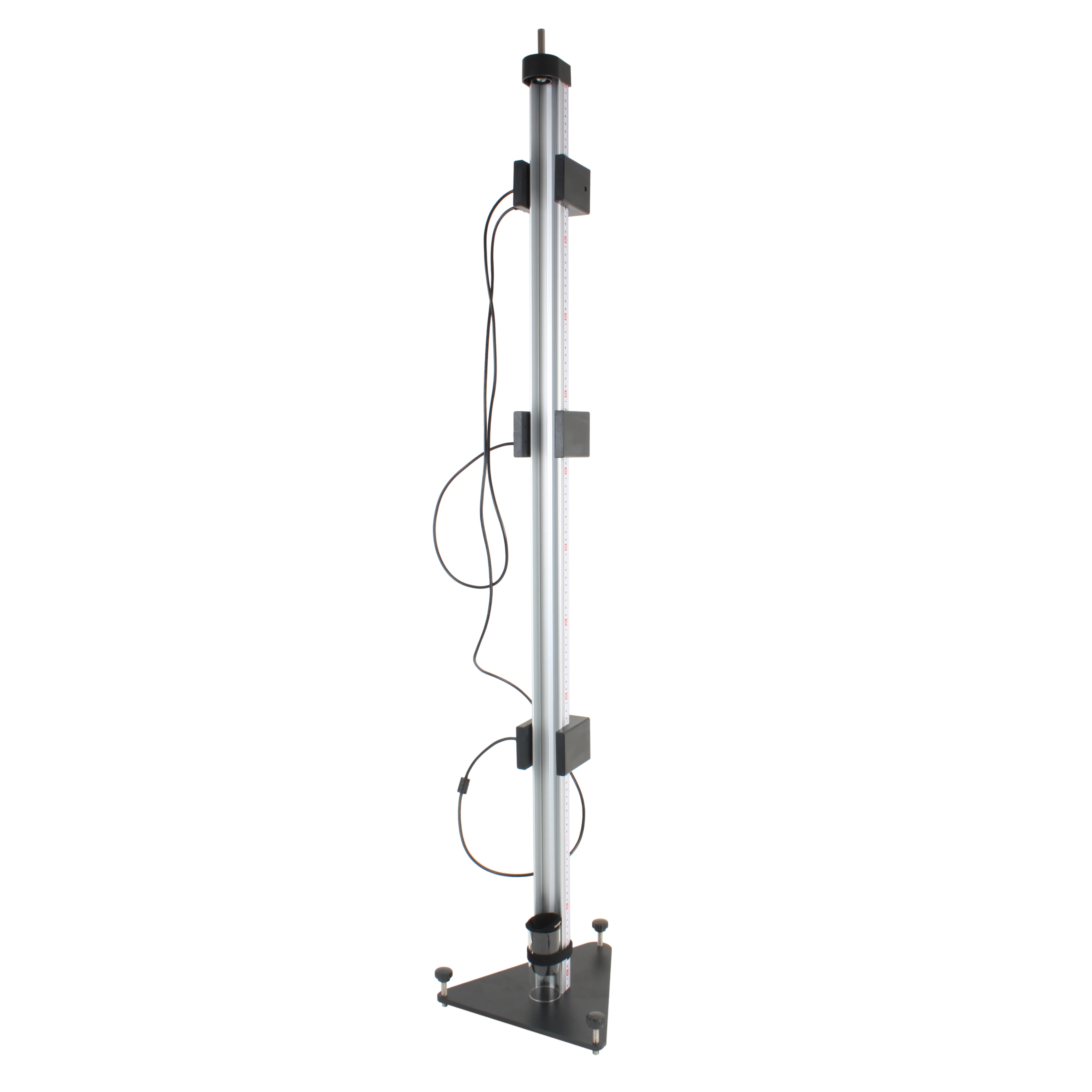
Science education at every level depends on the principle that students should observe, measure, and verify what they learn in textbooks. School laboratory equipment is the physical medium through which this translation happens. When a student uses a free fall instrument to measure gravitational acceleration, they are not simply repeating a formula — they are generating real data, confronting real variables, and developing genuine scientific judgment.
Standardized tools ensure that the data students generate is consistent and comparable. If one student's apparatus produces dramatically different results from another's due to quality inconsistencies, the learning experience breaks down. Reproducibility is a cornerstone of scientific literacy, and it can only be taught effectively when the school laboratory equipment itself is reliable and calibrated to recognized standards.
This alignment between curriculum goals and equipment performance is not accidental. Educational institutions that select standardized school laboratory equipment are essentially guaranteeing that their science instruction meets a minimum threshold of validity. Students graduate with experiences that genuinely prepare them for further study or professional environments.
Supporting Curriculum Alignment Across Grade Levels
National and regional science curricula are designed with specific learning milestones in mind. Physics, chemistry, biology, and earth sciences each require particular types of apparatus at different stages of a student's academic development. Standardized school laboratory equipment ensures that the tools available in any given school year are appropriate to the skills and knowledge being developed at that stage.
When schools use equipment that matches the specifications implied by their curriculum frameworks, teachers can deliver lessons with confidence. There is no need to improvise, compensate for equipment limitations, or skip practical exercises because the available tools cannot perform as required. This consistency strengthens lesson planning and ultimately improves student outcomes.
Moreover, curriculum alignment through standardized school laboratory equipment allows students who transfer between schools or districts to continue their education without significant disruption. Familiarity with standard tools means the transition from one learning environment to another is smoother and less academically disruptive.
Safety Standards and Risk Management in School Laboratories
Why Standardization Directly Reduces Laboratory Hazards
Laboratory environments, even at school level, carry inherent risks. Chemical reactions, electrical experiments, mechanical testing, and biological work all introduce hazard scenarios that must be carefully managed. Standardized school laboratory equipment plays a central role in this risk management framework by ensuring that every piece of apparatus meets safety specifications validated by educational and industrial standards bodies.
Equipment that has been tested, certified, and approved for educational use includes safety features specifically designed for the school environment. Impact testing devices, for example, are built to contain energy transfer within safe parameters, protecting students while still delivering meaningful experimental results. When schools choose non-standardized alternatives to save costs, they often unknowingly introduce safety gaps that expose students and teachers to preventable risks.
Standardized school laboratory equipment also comes with documented usage guidelines, maintenance protocols, and disposal instructions that help schools maintain safe practices over the full lifecycle of each instrument. This documentation is invaluable for training new laboratory staff and ensuring compliance with school health and safety policies.
Liability, Accountability, and Institutional Protection
Beyond student wellbeing, standardized school laboratory equipment protects institutions from legal and administrative liability. When an incident occurs in a laboratory setting, schools are scrutinized based on whether their equipment met recognized standards and whether proper protocols were followed. Using certified, standardized instruments provides a clear, defensible record of responsible procurement.
Insurance providers and regulatory bodies increasingly require evidence of standardized practices in school laboratories. Schools that document their use of approved school laboratory equipment are better positioned during inspections and audits. This institutional protection is not a trivial consideration — it underpins the trust that parents, communities, and regulatory authorities place in the school's ability to manage its learning environments safely.
The accountability value of standardization extends to procurement processes as well. When purchasing teams can reference specific equipment standards, comparisons become objective and defensible. Budget allocations for school laboratory equipment are easier to justify when tied to recognized quality criteria rather than subjective assessments.
Equity and Access: Standardization as a Tool for Fairness
Bridging the Gap Between Well-Funded and Under-Resourced Schools
One of the most compelling reasons to advocate for standardized school laboratory equipment is its role in educational equity. In many educational systems, significant disparities exist between well-funded schools in affluent areas and under-resourced institutions serving economically disadvantaged communities. When laboratory equipment standards are clearly defined and universally applied, policymakers and administrators have a concrete benchmark against which every school can be measured.
Standardization creates a common floor. Every student, regardless of their school's location or funding level, should have access to school laboratory equipment that meets the same functional and safety requirements. This common floor is the basis for equitable science education — a goal that most modern educational systems formally endorse, even if they do not always achieve it in practice.
Procurement frameworks built around standardized school laboratory equipment also make it easier for education authorities to direct funding effectively. When all schools are working from the same equipment specification list, budget planning becomes transparent and comparative, making it easier to identify which schools are most in need of upgrades.
Preparing Students for Standardized Assessments and Higher Education
Standardized testing and university entrance requirements in science subjects implicitly assume that students have had access to consistent practical laboratory experience. A student who has worked regularly with properly calibrated, standards-compliant school laboratory equipment is far better prepared for practical assessments than one who has worked with inconsistent or poorly maintained instruments.
In higher education, incoming science students are expected to already understand fundamental experimental protocols and be familiar with standard apparatus categories. Schools that invest in quality school laboratory equipment aligned to recognized standards are giving their graduates a measurable head start in university-level science programs.
This preparation value compounds over time. Students who develop confidence and competence with standardized instruments during their school years enter higher education and professional training with a foundation that non-standardized school environments simply cannot provide. The downstream impact of this investment is substantial.
Practical Considerations for Selecting Standardized School Laboratory Equipment
Evaluating Quality, Specification, and Functional Range
Selecting school laboratory equipment that meets standardization goals requires a structured evaluation process. Schools should begin by reviewing their curriculum requirements and identifying the specific experimental competencies students must develop at each grade level. This needs analysis forms the basis for a specification list that can then be matched against available equipment options.
Key evaluation criteria include material quality, calibration accuracy, durability under regular student use, and compliance with relevant safety standards. For physics instruction, instruments such as the school laboratory equipment designed for impact and free fall testing provide exactly the kind of measurable, repeatable experimental data that builds genuine physics understanding in students.
Longevity and maintainability are equally important. Schools should prioritize school laboratory equipment that can be serviced locally, has readily available replacement components, and comes with clear maintenance documentation. Equipment that fails prematurely or cannot be repaired creates budget pressures and disrupts instruction continuity.
Institutional Procurement Strategy and Long-Term Planning
Effective procurement of school laboratory equipment is not a one-time event but an ongoing institutional responsibility. Schools benefit from developing a laboratory equipment inventory strategy that tracks the age, condition, and performance status of each instrument. This living inventory forms the foundation for annual budget requests and replacement planning.
Collaborative procurement among schools within a district or region can also improve access to standardized school laboratory equipment while reducing per-unit costs. When multiple institutions align on the same specification list, their combined purchasing volume increases negotiating leverage and ensures consistency across the district's science programs.
Training is another critical dimension of institutional planning. Even the highest-quality school laboratory equipment delivers limited educational value if teachers are not properly trained to use it and integrate it into their lesson plans. Procurement decisions should be accompanied by professional development investment that ensures teachers are confident and effective with the tools available to them.
FAQ
What makes school laboratory equipment considered 'standardized'?
Standardized school laboratory equipment refers to instruments that meet recognized technical specifications, safety certifications, and performance criteria established by educational authorities or industrial standards bodies. Standardization ensures that the equipment is safe for student use, produces consistent and reproducible results, and aligns with the practical requirements of the school science curriculum.
How often should schools review and replace their laboratory equipment?
The review frequency depends on usage intensity, equipment type, and institutional policy, but a general best practice is to assess all school laboratory equipment annually for calibration accuracy, structural integrity, and safety compliance. High-use instruments may require inspection more frequently. Replacement decisions should be guided by documented performance data rather than reactive responses to visible damage alone.
Can under-resourced schools afford standardized laboratory equipment?
While upfront costs can be a barrier, investing in standardized school laboratory equipment typically reduces long-term expenditure by minimizing premature replacements, safety incidents, and instructional disruptions. Many educational funding programs at regional and national levels specifically allocate resources for laboratory equipment upgrades. Collaborative procurement strategies across school districts can also make standardized equipment accessible to schools with limited individual budgets.
Why is it important to match laboratory equipment to the specific science curriculum being taught?
Curriculum-aligned school laboratory equipment ensures that practical experiments directly reinforce the theoretical knowledge students are developing in their coursework. Mismatched equipment may be too advanced, too simplistic, or incapable of demonstrating the specific principles outlined in the curriculum, leading to gaps in practical learning. Proper alignment maximizes the educational return on every instrument purchased and ensures students achieve the practical competencies expected at each academic stage.
Table of Contents
- The Educational Foundation Built by Reliable School Laboratory Equipment
- Safety Standards and Risk Management in School Laboratories
- Equity and Access: Standardization as a Tool for Fairness
- Practical Considerations for Selecting Standardized School Laboratory Equipment
-
FAQ
- What makes school laboratory equipment considered 'standardized'?
- How often should schools review and replace their laboratory equipment?
- Can under-resourced schools afford standardized laboratory equipment?
- Why is it important to match laboratory equipment to the specific science curriculum being taught?