 EN
EN

Modern education demands more than textbooks and lectures. When students engage with school laboratory equipment hands-on, abstract concepts in physics, chemistry, and biology become tangible, testable realities. Across every grade level and every subject area, well-chosen lab tools serve as the practical bridge between theoretical knowledge and real-world understanding. Schools that invest thoughtfully in their laboratory resources consistently report stronger student engagement, deeper conceptual retention, and measurably better performance in standardized science assessments.
Yet many institutions struggle to connect their procurement decisions directly to curriculum requirements. Purchasing school laboratory equipment without a clear framework for curriculum alignment often results in underused apparatus, wasted budgets, and missed learning outcomes. This article explores exactly how the right laboratory tools can be selected, organized, and deployed to fulfill—and even enrich—the demands of contemporary educational curricula from middle school through advanced secondary programs.
Understanding Curriculum Requirements and Laboratory Needs
Mapping Learning Objectives to Physical Apparatus
Before any procurement decision is made, science coordinators and curriculum leaders must map their official learning objectives against specific experimental activities. Each mandated outcome in a physics or chemistry syllabus typically implies a defined category of school laboratory equipment needed to demonstrate it. For example, objectives around gravitational acceleration, free-fall dynamics, or energy conservation in classical mechanics directly call for precision instruments capable of measuring motion, drop distance, and impact force with repeatable accuracy.
This mapping process ensures that every piece of equipment earns its place in the lab rather than sitting unused on a shelf. When teachers trace a direct line from the curriculum standard to the physical tool, lesson planning becomes far more purposeful. Students benefit because demonstrations and experiments are tightly synchronized with what they are learning at that exact stage of the year. The result is a feedback loop in which the equipment supports instruction and instruction gives the equipment its educational purpose.
Well-structured school laboratory equipment catalogs from reliable suppliers will often reference the subject areas and grade bands for which each instrument is appropriate. Procurement teams should request this alignment documentation and cross-reference it with national or regional curriculum standards before finalizing any order. This due diligence dramatically reduces the risk of misaligned spending.
Differentiating Core and Supplementary Apparatus
Not all school laboratory equipment carries equal curriculum weight. Core apparatus refers to instruments directly mandated or strongly implied by official syllabi—items without which a required experiment simply cannot be performed. Supplementary apparatus enriches teaching and can deepen student understanding, but its absence does not prevent curriculum compliance. Distinguishing between these two categories is essential for prioritizing capital expenditure, especially in schools with constrained budgets.
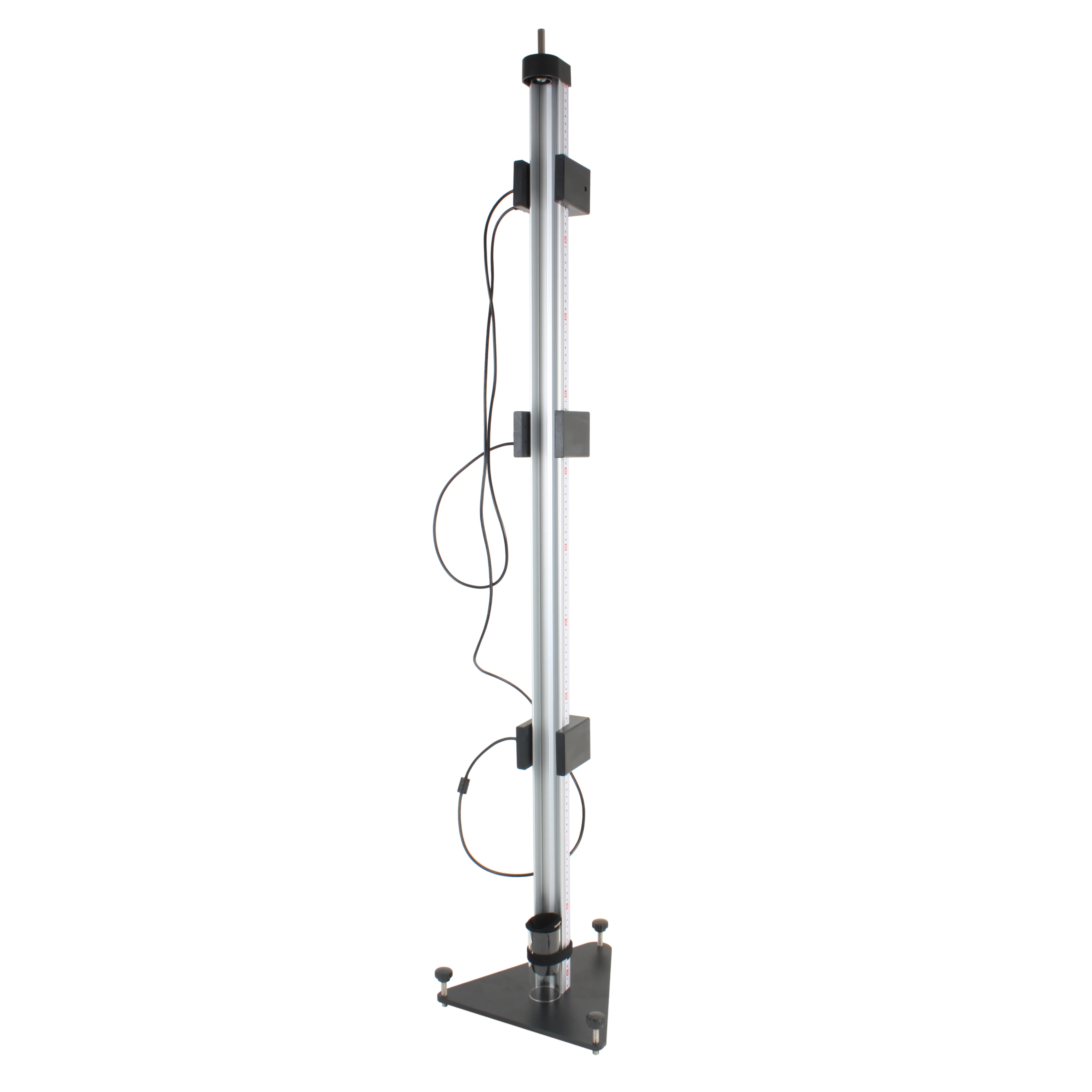
For a secondary physics program that covers Newtonian mechanics, a free-fall or impact-dropping test apparatus is firmly in the core category. This type of school laboratory equipment allows students to measure the relationship between drop height, fall time, and impact energy—concepts that appear across multiple standardized examination specifications. Schools that equip their labs with purpose-built instruments for such experiments give students the most direct and reliable path to understanding these mandatory topics.
Supplementary tools, such as advanced data-logging sensors or extended-range precision balances, can then be added progressively as budget allows. The key principle is that no supplementary item should be purchased before all core school laboratory equipment requirements have been met. A well-prioritized procurement plan protects both educational quality and institutional finances.
How Specific Equipment Types Fulfill Science Syllabus Demands
Physics Instruments and Mechanics Curricula
Physics syllabi at the secondary level almost universally include sections on mechanics, gravity, and energy transfer. These topics require school laboratory equipment that can demonstrate principles such as free fall, projectile motion, and the conversion of potential to kinetic energy in a safe, repeatable, and measurable way. Apparatus designed specifically for impact and dropping tests—such as the school laboratory equipment developed for free-fall and impact testing in teaching environments—provides exactly this capability in a format designed for classroom use.
These instruments allow students to vary drop heights, measure impact force, and record time-of-fall data, directly enabling them to verify equations of motion from their textbooks. When students can physically confirm that experimental results align with theoretical predictions, their understanding of core physics concepts solidifies in a way that no amount of passive instruction can replicate. This is the defining value of properly matched school laboratory equipment in a mechanics unit.
From a curriculum compliance standpoint, having dedicated instruments for mechanics experiments also supports the practical assessment components that many examination boards now require. Students who have regularly worked with high-quality, purpose-built school laboratory equipment perform more confidently in practical examinations because they are familiar with the measurement principles, error analysis, and result interpretation those assessments demand.
Chemistry and Biology Laboratory Requirements
While physics instruments serve mechanics and energy topics, chemistry and biology programs have their own distinct school laboratory equipment requirements. Chemistry curricula mandate apparatus for titration, distillation, qualitative analysis, and reaction rate measurement. Biology programs require microscopy tools, dissection kits, and increasingly, digital imaging equipment for cell observation and specimen analysis. In both subjects, the equipment must meet safety standards appropriate for student use while delivering sufficient precision for meaningful experimental results.
Schools that align their chemistry and biology lab inventories with current syllabus documents avoid the common mistake of retaining outdated equipment that no longer supports the required experimental procedures. Regular curriculum reviews should trigger corresponding equipment audits to ensure that the school laboratory equipment inventory remains synchronized with updated teaching requirements. A mismatched lab inventory is one of the most common—and most avoidable—barriers to effective science education.
Practical work in chemistry and biology also directly supports the development of transferable scientific skills: observation, hypothesis formation, data recording, and critical evaluation. These competencies are embedded in curriculum frameworks worldwide, and they can only be developed through sustained, structured interaction with appropriate school laboratory equipment. The apparatus itself becomes a teaching medium, not merely a demonstration prop.
Safety, Durability, and Compliance in Educational Settings
Why Safety Standards Matter for School Labs
School laboratory environments are fundamentally different from commercial or industrial labs. The primary users are students—often without prior hands-on scientific experience—which means that every piece of school laboratory equipment must be designed with safety as a non-negotiable priority. Apparatus should meet recognized safety certifications, include appropriate guarding mechanisms, and be accompanied by clear operating instructions that teachers can easily communicate in a classroom context.
For instruments involving mechanical forces, impact events, or elevated drop heights, safety considerations are especially critical. Equipment designed for educational free-fall or dropping experiments must incorporate features that contain potential energy release within safe parameters and prevent accidental student contact with moving components during operation. Institutions that verify safety compliance before purchase not only protect their students but also protect themselves from institutional liability.
Curriculum compliance and safety compliance are closely linked. Many national curriculum frameworks explicitly require that all school laboratory equipment used in teaching meets applicable safety standards. Procurement officers should request conformity documentation from suppliers and retain it as part of the school's formal laboratory safety records. This documentation is frequently reviewed during institutional inspections and accreditation processes.
Durability and Maintenance in High-Use Environments
School labs are high-traffic environments. A piece of school laboratory equipment may be handled by dozens of students every week, across multiple class groups, for years at a time. This usage intensity means that durability is not a luxury feature—it is a functional requirement. Equipment that breaks down frequently not only disrupts lessons but also creates gaps in curriculum delivery that are difficult to recover from within a fixed academic timetable.
When evaluating durability, procurement teams should consider the materials used in construction, the accessibility of replacement parts, and the availability of technical support from the supplier. Purpose-built educational school laboratory equipment from reputable manufacturers is typically engineered for higher cycle counts and more robust handling than equivalent research-grade instruments, which are often designed for more controlled adult use. Choosing the right category of equipment for the school context is as important as choosing the right type.
Maintenance planning is also a curriculum support function. A school that schedules regular inspection and calibration of its school laboratory equipment ensures that instruments remain accurate and reliable throughout the academic year. Inaccurate equipment produces misleading experimental data, which not only confuses students but actively undermines the learning objectives the experiment was designed to achieve. Maintenance is, in this sense, a direct investment in curriculum quality.
Integrating Laboratory Equipment into Lesson Planning and Pedagogy
Teacher Training and Equipment Familiarity
Even the most carefully selected school laboratory equipment cannot fulfill its curriculum support function if teachers are not confident and competent in using it. Professional development programs that give science teachers structured opportunities to work with new apparatus before introducing it to students are a critical but often overlooked component of effective equipment integration. When teachers understand the operational parameters, calibration requirements, and common error sources of their instruments, they deliver more effective and more accurate instruction.
Supplier-provided training resources, instructional videos, and detailed user manuals in accessible language all contribute to faster and deeper teacher familiarity with new school laboratory equipment. Schools should factor the availability of these support resources into their purchasing decisions. A well-supported piece of apparatus quickly becomes a curriculum asset; an unsupported one often becomes an underused liability. The pedagogical value of equipment is always mediated by the teacher's confidence in using it.
Structured teacher training also helps institutions develop standardized experimental protocols—clear, consistent procedures that ensure all student groups experience the experiment in the same way. This consistency is especially important when experimental data is used as part of assessed coursework, as it ensures that all students have access to equivalent learning and assessment conditions. Standardized use of school laboratory equipment is, therefore, both a pedagogical and an equity concern.
Connecting Equipment Use to Assessment Outcomes
Many contemporary science examination frameworks include practical assessment components in which students must demonstrate their ability to plan, conduct, and evaluate experiments using actual apparatus. Schools that regularly incorporate school laboratory equipment into their teaching—rather than reserving it only for special demonstrations—prepare students far more effectively for these assessed components. Familiarity with physical instruments reduces cognitive load during assessments, allowing students to focus on scientific reasoning rather than equipment operation.
Data from practical experiments conducted with accurate, reliable school laboratory equipment also supports stronger written exam performance. Students who have physically measured gravitational acceleration using a free-fall apparatus, for example, have a concrete sensory and cognitive anchor for the abstract equations they encounter in written papers. This embodied learning advantage is one of the strongest arguments for maintaining well-equipped, curriculum-aligned school labs rather than relying on simulations alone.
Simulation software has a legitimate supporting role in science education, particularly for visualizing phenomena that cannot be safely reproduced in a school setting. However, it cannot replace the epistemological value of working with real school laboratory equipment. Students who only encounter science through screens develop a fundamentally different—and in important ways, shallower—understanding of the physical world than those who engage with actual measurement instruments and experimental processes.
FAQ
What criteria should schools use to select school laboratory equipment?
Schools should prioritize direct alignment with current curriculum learning objectives, followed by safety certification, durability for high-use environments, and supplier support. Core apparatus—tools directly required for mandated experiments—should be sourced before supplementary items. Budget allocation should always reflect curriculum priority rather than availability or price alone. Involving science department heads and curriculum coordinators in procurement decisions ensures that the selected school laboratory equipment genuinely serves teaching and assessment needs.
How often should school laboratory equipment be reviewed or replaced?
Laboratory equipment inventories should be reviewed at least annually, ideally at the start of each academic year and whenever a curriculum update is introduced. Worn, inaccurate, or outdated school laboratory equipment should be replaced promptly to maintain the integrity of experimental activities. Calibration checks for precision instruments should be scheduled termly. Schools that maintain rolling replacement programs—rather than waiting for complete equipment failure—experience fewer curriculum disruptions and lower total replacement costs over time.
Can school laboratory equipment support both teaching and internal assessment?
Yes. Purpose-built school laboratory equipment designed for educational use typically supports both formative teaching activities and formal practical assessments. Instruments with clear operating procedures, consistent measurement outputs, and accessible calibration features are particularly well-suited to assessed practical work. Schools should ensure that the apparatus used in internal assessments matches the type and quality of instruments students may encounter in external examinations, as familiarity with the equipment directly influences student performance and confidence.
What is the role of impact-dropping test apparatus in a school physics curriculum?
Impact-dropping test apparatus fulfills a specific and important role in secondary physics programs by enabling students to conduct hands-on investigations of free-fall motion, gravitational acceleration, and energy transfer. This type of school laboratory equipment directly supports curriculum objectives related to Newtonian mechanics, equations of motion, and energy conservation—topics that appear in virtually every secondary physics syllabus worldwide. It provides measurable, repeatable experimental data that students can analyze and compare against theoretical predictions, which is precisely the kind of practical work that modern science curricula are designed to develop.
Table of Contents
- Understanding Curriculum Requirements and Laboratory Needs
- How Specific Equipment Types Fulfill Science Syllabus Demands
- Safety, Durability, and Compliance in Educational Settings
- Integrating Laboratory Equipment into Lesson Planning and Pedagogy
-
FAQ
- What criteria should schools use to select school laboratory equipment?
- How often should school laboratory equipment be reviewed or replaced?
- Can school laboratory equipment support both teaching and internal assessment?
- What is the role of impact-dropping test apparatus in a school physics curriculum?