
 EN
EN
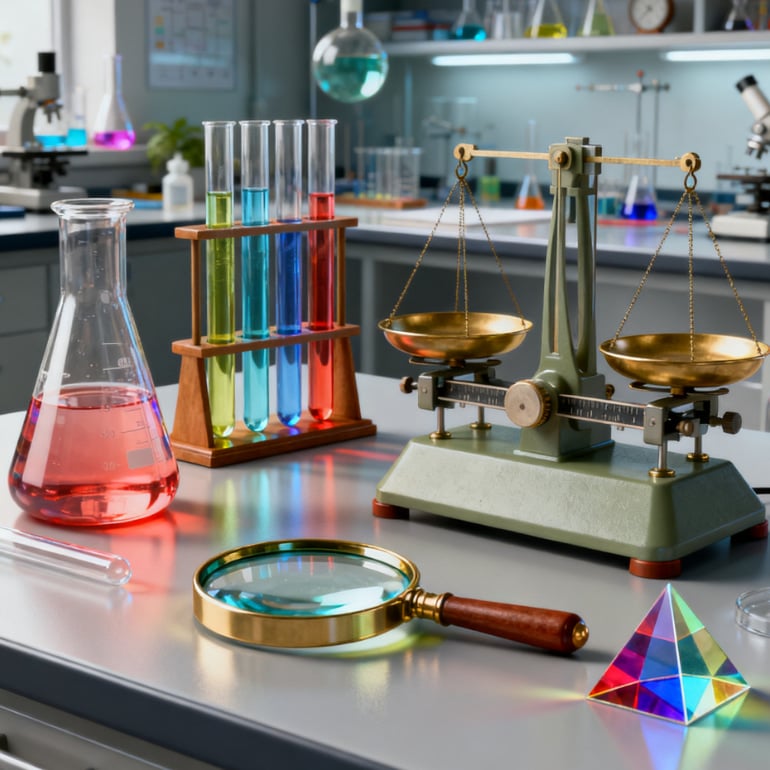
Selecting the right school laboratory equipment is one of the most consequential decisions a science department can make. From middle school chemistry classes to advanced high school physics labs, the tools students interact with daily must be capable of withstanding heavy use, repeated handling, and the occasional mishap that comes with a learning environment. The challenge isn't just finding equipment that works — it's finding equipment that keeps working through years of demanding use by hundreds of students.
Durability and student-proof design are not just nice-to-have features — they are core requirements for any institution investing in science education. When school laboratory equipment breaks down frequently, it disrupts lesson plans, drains maintenance budgets, and discourages students from engaging with hands-on learning. In this guide, we examine what makes lab equipment genuinely durable, which categories deserve your closest attention, and how to evaluate your options to get lasting value for your institution.
Why Durability Must Be the First Criterion for School Lab Equipment
The Unique Stress Environment of Educational Laboratories
Educational laboratories are among the most demanding environments for any piece of equipment. Unlike research or industrial labs where trained professionals handle instruments carefully, school labs see a constant rotation of students at various skill levels. Some are handling scientific instruments for the first time, others are still developing fine motor skills, and a few will inevitably apply more force than intended. School laboratory equipment must be engineered to accommodate this reality without frequent failure.
Repetitive stress is a major factor. A single piece of equipment might be used six to eight times a day across different class periods, five days a week. Over an academic year, that adds up to hundreds of use cycles. Materials that might survive casual use in a home setting can degrade rapidly under this kind of continuous demand. Procurement officers and department heads must factor in total cost of ownership, not just the initial purchase price.
Beyond physical durability, there is also the matter of calibration and measurement accuracy. Equipment that drifts out of calibration quickly, or that delivers inconsistent results because components have loosened through use, undermines the entire educational purpose. Durable school laboratory equipment should maintain its performance specifications across its full service life.
The Long-Term Financial Case for Quality Equipment
School budgets for science departments are rarely generous. When administrators see an opportunity to save money by purchasing lower-cost alternatives, the short-term logic can seem compelling. However, the long-term financial picture tells a very different story. Low-quality school laboratory equipment tends to require replacement within one to three years, while properly engineered, durable alternatives can serve a school for a decade or more.
Replacement costs are only one part of the equation. There are also costs associated with ordering replacements, storing spare parts, and managing the disruption caused when equipment fails mid-curriculum. Teachers spend time troubleshooting instead of teaching. Students lose lab time that cannot be recovered. When you calculate the true cost of inferior school laboratory equipment, investing in durable, well-built instruments nearly always delivers better financial outcomes over time.
Procurement teams that evaluate suppliers based on lifetime value rather than unit price tend to achieve better outcomes for their institutions. Requesting multi-year warranties, looking for commercially proven designs, and prioritizing equipment with simple, replaceable components are all strategies that reduce long-term costs while protecting instructional quality.
Key Categories of Student-Proof School Laboratory Equipment
Physics and Gas Law Apparatus
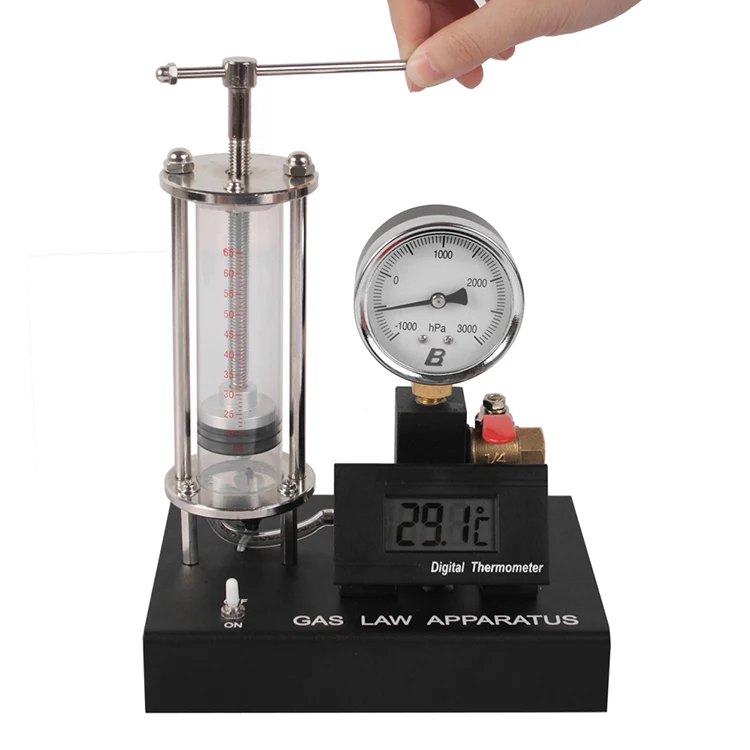
Physics experiments place particularly high demands on school laboratory equipment because they often involve pressure, temperature, and mechanical forces. Gas law experiments, for example, require apparatus that maintains reliable seals under repeated pressurization cycles. Equipment designed with robust sealing mechanisms, reinforced connection points, and high-tolerance measurement chambers will consistently outperform entry-level alternatives in a student lab setting.
A purpose-built solution like the school laboratory equipment designed for Boyle's Gas Law demonstrations is a strong example of how purpose-built apparatus can reduce failure rates while improving the educational experience. Such kits are engineered specifically for the repetitive use patterns of classroom instruction, meaning their materials, tolerances, and assembly methods are all chosen with student interaction in mind. The result is a piece of equipment that delivers reliable, repeatable results class after class.
When evaluating physics apparatus, pay close attention to the quality of connecting fittings, the clarity and durability of measurement scales, and whether the design allows students to observe the phenomena being studied without creating opportunities for misassembly. Transparent components, color-coded connections, and foolproof assembly sequences all contribute to a student-proof design that keeps experiments on track.
Chemistry and Life Science Equipment
Chemistry labs introduce additional durability requirements, including resistance to chemical corrosion and exposure to elevated temperatures. School laboratory equipment in chemistry settings should be made from materials that can withstand the range of chemicals typically used in secondary-level curricula, including mild acids, bases, and organic solvents. Equipment made from borosilicate glass, high-density polyethylene, or polypropylene will hold up far better than lower-grade alternatives.
Life science equipment, including microscopes, dissection tools, and specimen storage, must be built to withstand the kind of handling that students provide. Microscopes, in particular, represent a significant investment and should feature metal rather than plastic optical components, durable stage mechanisms, and sealed electrical systems where lighting is incorporated. Schools that invest in properly built microscopes often find that the same units serve students reliably for ten to fifteen years.
The concept of student-proof design extends beyond materials to encompass the overall user experience. School laboratory equipment that is intuitive to set up, difficult to misuse, and easy for teachers to inspect quickly between class periods keeps lab sessions productive and safe. Reducing the complexity of setup procedures also reduces the opportunities for students to introduce errors that compromise experimental results.
Design Features That Define Genuinely Student-Proof Lab Instruments
Structural Robustness and Impact Resistance
The first thing that distinguishes genuinely student-proof school laboratory equipment from standard commercial instruments is structural robustness. Student-proof design begins at the engineering stage, where load-bearing components are oversized relative to their expected stress, joints and connections are reinforced, and materials are chosen for impact resistance rather than just functional suitability. A piece of equipment that flexes, rattles, or shows visible wear after minimal use is unlikely to survive a school year intact.
Impact resistance is particularly critical for equipment that students carry, transport between benches, or store in drawers and cabinets. Drop testing and stress testing during the design phase help manufacturers identify weak points that can be reinforced before the product reaches the classroom. Schools should ask suppliers about the testing protocols applied to their school laboratory equipment and whether those tests reflect the conditions of actual classroom use.
Modular designs that allow damaged or worn components to be replaced individually, rather than requiring complete unit replacement, represent excellent value in student-facing environments. This approach keeps repair costs low, reduces waste, and extends the functional lifespan of the equipment significantly. Modularity should be considered a positive selection criterion when evaluating school laboratory equipment for purchase.
Intuitive Operation and Error-Tolerant Design
Student-proof school laboratory equipment is not just physically tough — it is also cognitively forgiving. Equipment designed with error-tolerant features reduces the frequency of student mistakes that damage instruments, corrupt experimental results, or create safety hazards. Examples include pressure relief valves on gas apparatus, automatic shutoff features on electrical equipment, and keyed connectors that prevent incorrect assembly.
Clear, permanently marked scales, measurement points, and operating instructions directly on the equipment itself reduce dependence on instruction sheets that can be lost or ignored. Color coding to indicate correct connection sequences, safe operating ranges, and component matching helps students self-correct without requiring constant teacher supervision. These design features make school laboratory equipment more effective as a teaching tool while simultaneously reducing wear caused by incorrect use.
Teachers consistently report that intuitive, well-labeled school laboratory equipment allows them to spend more class time focused on the science itself and less time managing equipment-related issues. This improvement in instructional efficiency represents a real and measurable return on investment for schools that prioritize thoughtful design in their purchasing decisions.
Evaluating Suppliers and Selecting the Right Equipment for Your School
Criteria for Assessing Equipment Quality Before Purchase
Selecting high-quality school laboratory equipment requires a structured evaluation approach. Requesting physical samples for review before placing large orders is a best practice that allows procurement teams and science faculty to assess build quality, ease of use, and material quality firsthand. Written specifications should be reviewed carefully, with particular attention to the materials used in critical components and the tolerances applied to measurement systems.
Warranty terms are a direct indicator of the manufacturer's confidence in their product. Suppliers offering multi-year warranties on school laboratory equipment are signaling that they expect their products to deliver sustained performance under real-world conditions. Shorter warranties or warranty terms that exclude student damage may indicate lower confidence in the product's durability. Always review warranty coverage in the context of your school's actual usage patterns.
Compliance with relevant safety standards is a non-negotiable requirement. All school laboratory equipment used in educational settings should meet the applicable standards for student safety in your region. Documentation of compliance should be available from the supplier and reviewed before any equipment enters the classroom. Safety certifications protect both students and the institution from liability.
Aligning Equipment Selection with Curriculum Requirements
The most durable equipment in the world delivers limited value if it doesn't align with your curriculum. When selecting school laboratory equipment, procurement teams should work closely with science department heads to map equipment capabilities to specific curriculum objectives. Equipment that enables students to directly observe and measure the phenomena described in their coursework produces significantly better learning outcomes than generic alternatives.
Specialized apparatus designed for specific experiments, such as gas law demonstration kits engineered to clearly illustrate the relationship between pressure, volume, and temperature, provides much stronger curriculum alignment than multi-purpose equipment adapted for the purpose. This specificity also tends to translate into better durability, because the equipment is designed from the outset for the exact type of use it will experience.
Curriculum alignment also simplifies teacher preparation and reduces training time for new staff. When school laboratory equipment is purpose-built for specific educational objectives, the connection between the equipment and the lesson content is immediately apparent. This clarity supports better experimental design, more consistent student outcomes, and more efficient use of limited lab time throughout the academic year.
FAQ
What makes school laboratory equipment truly student-proof?
Truly student-proof school laboratory equipment combines physical robustness with intuitive, error-tolerant design. This means using impact-resistant materials, reinforced joints, clearly labeled measurement scales, foolproof assembly sequences, and safety features that prevent misuse from causing damage or injury. Equipment that is both physically durable and easy to use correctly will outlast and outperform alternatives that only address one of these dimensions.
How often should school laboratory equipment be replaced?
High-quality school laboratory equipment from reputable manufacturers can typically serve a school for ten to fifteen years when properly maintained. Lower-grade alternatives often require replacement within three to five years. The key factor is build quality relative to the demands of student use. Conducting annual condition assessments and addressing minor maintenance issues promptly will extend the usable lifespan of most equipment significantly.
Is purpose-built apparatus better than general-purpose equipment for school labs?
In most cases, yes. Purpose-built school laboratory equipment designed for specific experiments tends to deliver better educational outcomes, greater durability, and clearer curriculum alignment than general-purpose instruments adapted for educational use. Equipment engineered specifically for student interaction, such as gas law apparatus designed for classroom demonstrations, incorporates design features that generic equipment simply does not offer.
What safety standards should school laboratory equipment comply with?
The specific standards applicable to school laboratory equipment vary by region, but institutions should prioritize equipment that complies with recognized national or international safety standards for educational materials. Suppliers should be able to provide documentation of compliance upon request. Equipment used in science education must meet standards covering electrical safety, chemical resistance, and mechanical integrity to protect students and staff during normal use.