 EN
EN
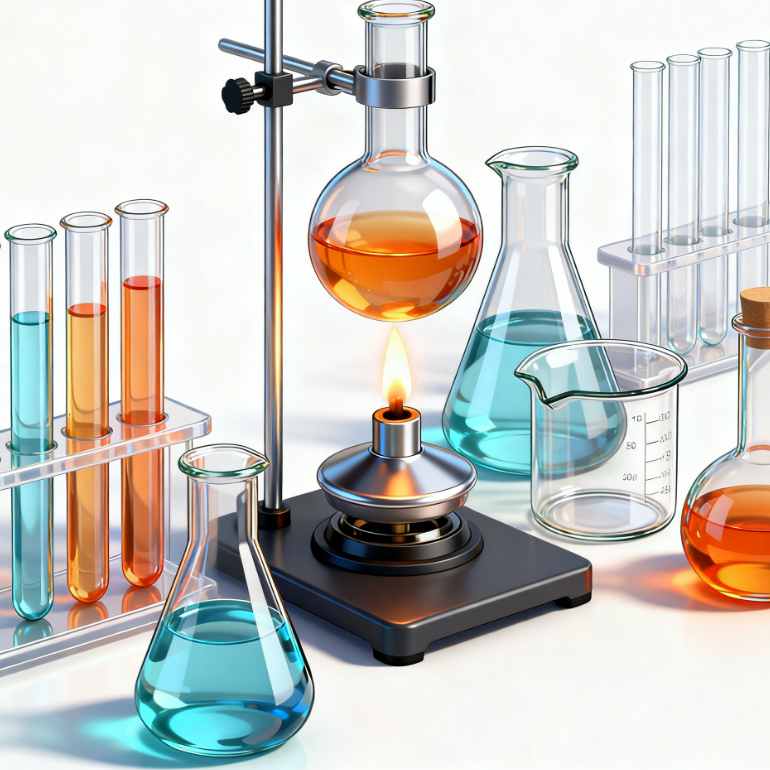
Setting up or upgrading a K-12 science program requires far more than simply ordering supplies and placing them on shelves. The right school laboratory equipment must align with grade-level learning objectives, safety regulations, budgetary constraints, and the long-term goals of science education. Whether you are a curriculum director, school administrator, or science department head, having a structured, comprehensive checklist ensures that no critical item is overlooked and that every piece of equipment earns its place in the classroom.
This guide is designed to serve as the definitive reference point for K-12 institutions planning, auditing, or refreshing their science labs. From foundational safety hardware to advanced experimental kits used in upper secondary courses, each category of school laboratory equipment plays a specific instructional role. By following this checklist, schools can build labs that inspire curiosity, support hands-on inquiry, and meet both national curriculum standards and practical operational requirements.
Understanding Grade-Level Equipment Needs Across K-12
Elementary School Laboratory Equipment Priorities
For students in kindergarten through fifth grade, the primary goal of school laboratory equipment is to encourage exploration and observation rather than complex experimentation. At this stage, equipment must be durable, intuitive, and safe for younger hands. Simple tools such as magnifying glasses, basic balance scales, measuring tapes, thermometers, and plant growth kits form the foundation of early scientific inquiry.
Elementary labs also benefit from weather stations, soil testing kits, and basic animal habitat observation units. These tools support life science, earth science, and physical science standards without requiring chemical handling or complex procedures. When evaluating school laboratory equipment for this age group, prioritize items that can withstand repeated use by young students and that clean up easily after activities.
Storage and organization at the elementary level should also be factored into the checklist. Clearly labeled, color-coded supply bins, low shelving accessible to children, and secure locking cabinets for any fragile items are all part of a well-equipped elementary science space.
Middle School Laboratory Equipment Essentials
Middle school represents a transition period where students begin engaging with more structured experiments and formal laboratory procedures. At this stage, school laboratory equipment should introduce students to Bunsen burners or electric hot plates, basic chemistry glassware, microscopes, and dissection tools. Safety goggles and lab aprons become mandatory items at this level, and every lab station should have them readily accessible.
Middle school science curricula typically cover life science, earth science, chemistry fundamentals, and introductory physics. For each domain, the equipment checklist should include beakers, Erlenmeyer flasks, graduated cylinders, petri dishes, slides and coverslips, forceps, and dissecting trays. Physical science units benefit from Newton meters, simple circuit kits, and spring scales.
A well-stocked middle school lab also includes consumable supplies such as litmus paper, pH indicators, and filter paper. These consumables are a recurring budget consideration and should be tracked as part of an annual school laboratory equipment inventory review to ensure availability at the start of each academic unit.
High School Laboratory Equipment for Advanced Learning
High school science programs, particularly those offering biology, chemistry, physics, and environmental science, demand a significantly expanded range of school laboratory equipment. At this level, students conduct controlled experiments, analyze quantitative data, and apply scientific methodology in structured investigations. Equipment must therefore support precision, reproducibility, and alignment with curriculum benchmarks.
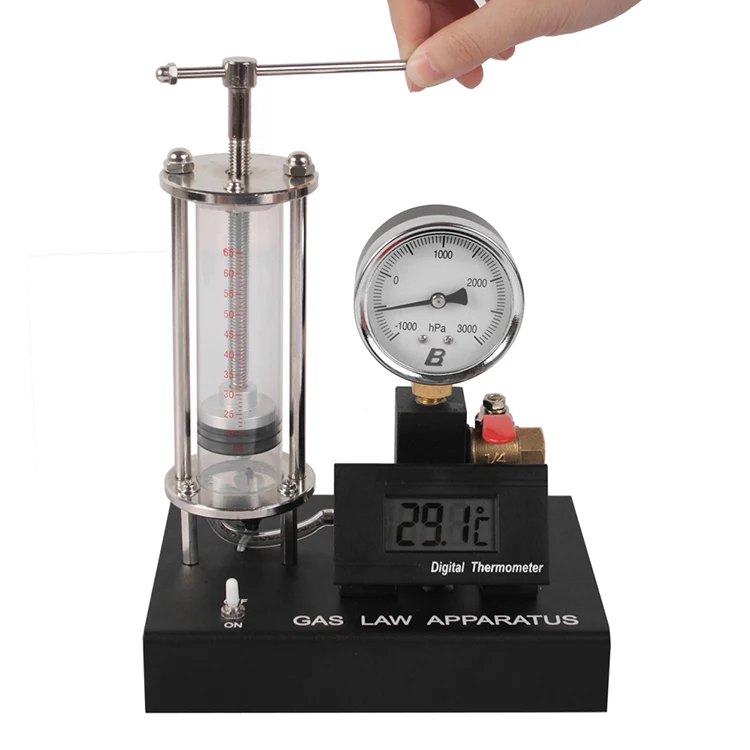
For high school chemistry labs, the checklist should include analytical balances, burettes, volumetric flasks, condensers, and a full range of safety equipment including eyewash stations, fire blankets, and chemical storage cabinets. Biology labs require compound and stereo microscopes, centrifuges, electrophoresis units, and incubators for more advanced coursework. Physics programs benefit greatly from specialized apparatus such as the school laboratory equipment designed for gas law investigations, which allows students to explore Boyle's Law and related thermodynamic principles through direct measurement.
Environmental science courses add another layer to the high school checklist, requiring water quality testing kits, soil analysis tools, GPS units for field studies, and air quality monitoring sensors. Ensuring that your checklist captures all of these vertical layers across subject areas will prevent gaps that disrupt instruction mid-unit.
Safety Standards and Compliance Checklist
Mandatory Safety Equipment for Every K-12 Lab
Regardless of grade level or subject, every K-12 science lab must be equipped with a core set of safety hardware before any instruction takes place. This is the most non-negotiable section of any school laboratory equipment checklist. The baseline safety items include fire extinguishers, first aid kits, eyewash stations, emergency shower facilities for labs using chemicals, fire blankets, and clearly marked emergency exit signage.
Personal protective equipment is equally essential. Every student should have access to properly fitting safety goggles, lab coats or aprons, and nitrile or latex gloves when handling biological or chemical materials. Schools should stock these items in multiple sizes to accommodate the full range of student body sizes across K-12.
Ventilation is a frequently overlooked component of school laboratory equipment planning. Labs that use volatile chemicals or conduct heating experiments must have adequate fume hoods or local exhaust ventilation. Including ventilation assessments in the checklist ensures that the physical lab environment itself supports safe use of experimental tools.
Chemical and Biological Hazard Management Tools
Schools using chemical reagents at the middle or high school level must include proper storage and disposal equipment in their school laboratory equipment plan. Chemical storage cabinets with separate sections for flammables, corrosives, and oxidizers are required by most jurisdictional safety standards. A safety data sheet (SDS) binder or digital system should be accessible in the lab at all times.
Biological labs present their own set of hazard management requirements. Autoclaves or UV sterilization units, biohazard waste bins, and dedicated biosafety protocols should be part of the equipment infrastructure for any lab handling live cultures, animal specimens, or biological samples. These items should appear as a distinct category in your school laboratory equipment checklist to ensure they are not inadvertently bundled with general supply orders.
Spill kits tailored to both chemical and biological incidents round out the hazard management section. These kits contain absorbent materials, neutralizing agents, protective gloves, and disposal bags, and should be mounted near workstations for rapid access during incidents.
Core Apparatus for Hands-On Science Experiments
Physical Science and Physics Equipment
Hands-on inquiry in physical science requires equipment that allows students to observe, measure, and manipulate physical variables directly. For K-12 programs, the school laboratory equipment checklist for physics should span from basic force measurement tools at the elementary level to sophisticated apparatus at the high school level that supports formal scientific investigation.
Core items include dynamics carts and tracks for motion experiments, pulleys and inclined plane kits for force and work demonstrations, mass sets for balance investigations, and oscilloscopes or signal generators for wave and electricity units at the secondary level. Optics kits with lenses, prisms, and light sources support investigations into refraction and reflection. Gas law apparatus, including sealed syringe systems and pressure gauges, provide tangible, measurable demonstrations of thermodynamic principles that connect theory to practice.
When auditing existing school laboratory equipment for a physics curriculum, verify that each apparatus can generate consistent, repeatable results. Worn or imprecise instruments undermine the scientific method and lead to student frustration. Calibration records and replacement schedules should be part of the ongoing equipment management system.
Life Science and Biology Equipment
Biology programs across K-12 rely heavily on microscopy, specimen preparation, and ecological observation tools. The school laboratory equipment checklist for life science should begin with compound light microscopes rated for at least 400x magnification for middle and high school students, and basic stereo microscopes for elementary and early middle school dissection and observation work.
Prepared and blank microscope slides, staining kits, and coverslips are consumable items that require regular restocking. Dissection kits should contain scalpels, scissors, probes, pins, and dissecting pans. At the high school level, genetics and molecular biology units may require gel electrophoresis systems, micropipettes, and PCR simulation kits that introduce students to biotechnology concepts.
Ecological and environmental biology units benefit from field collection kits, aquatic sampling nets, soil core samplers, and portable pH and dissolved oxygen meters. Including these field-based items in the school laboratory equipment checklist acknowledges that biology education extends beyond the four walls of the classroom laboratory.
Chemistry and Earth Science Equipment
Chemistry labs at the middle and high school levels require a precise, well-organized collection of glassware, heating tools, and measurement instruments. The standard school laboratory equipment checklist for chemistry includes beakers of multiple volumes, Erlenmeyer flasks, test tubes and test tube racks, watch glasses, funnels, ring stands with clamps, wire gauze, and Bunsen burners or electric hot plates.
Measurement tools for chemistry labs should cover both mass and volume with high precision. Analytical balances accurate to 0.01 grams, burettes for titration experiments, and volumetric pipettes are essential for quantitative lab work. Indicator solutions, pH paper, and digital pH meters add versatility to acid-base investigations.
Earth science programs often require rock and mineral specimen collections, topographic modeling kits, seismograph simulations, and weather instrument sets. These tools give physical form to geological and atmospheric concepts. Ensuring that school laboratory equipment for earth science is updated and expanded alongside curriculum revisions keeps instruction aligned with current standards.
Budgeting, Sourcing, and Maintenance Planning
Prioritizing Equipment Purchases Within a Budget
Most K-12 schools operate with constrained science budgets, which makes prioritization an essential skill for administrators and department heads. A practical school laboratory equipment checklist should categorize each item as either essential, recommended, or supplemental. Essential items directly support curriculum-required experiments and cannot be substituted. Recommended items enhance instruction but have viable low-cost alternatives. Supplemental items enrich the learning experience but are not tied to specific learning outcomes.
Multi-purpose equipment should be prioritized over single-use items wherever possible. For example, a well-calibrated digital balance can serve chemistry, physics, and biology units alike. Similarly, a high-quality general-purpose microscope serves more instructional functions than a narrowly specialized unit at a comparable price point. Evaluating the cross-curricular utility of school laboratory equipment maximizes the instructional return on every dollar spent.
Grant funding is a frequently underutilized resource for K-12 science equipment. Federal STEM education grants, state science improvement programs, and private foundation funding are all potential sources. Maintaining a detailed, categorized school laboratory equipment checklist makes it significantly easier to build compelling grant applications with itemized justifications and cost estimates.
Equipment Maintenance and Lifecycle Management
Purchasing school laboratory equipment is only the beginning of a long-term management responsibility. All laboratory instruments require regular inspection, calibration, cleaning, and, in some cases, professional servicing. Including a maintenance schedule as part of the checklist ensures that equipment remains functional and safe throughout its operational life.
Each item in the lab inventory should carry a record of purchase date, warranty status, last inspection date, and expected replacement year. This information allows administrators to forecast future procurement needs and avoid situations where multiple critical instruments fail in the same budget cycle. Microscopes, balances, and gas law apparatus all have known service intervals that should be incorporated into annual science department planning.
End-of-life disposal is another aspect of school laboratory equipment management that requires attention, particularly for chemical reagents, biological specimens, and electronic components. Schools must follow local environmental regulations for disposal, and the lab checklist should include disposal protocols alongside the inventory records to ensure compliance.
FAQ
What is the most important category of school laboratory equipment for K-12 safety compliance?
Safety hardware takes absolute priority in any school laboratory equipment checklist. This includes eyewash stations, fire extinguishers, first aid kits, fume hoods, and personal protective equipment such as goggles, aprons, and gloves. No experimental apparatus should be used until the lab meets minimum safety infrastructure requirements as defined by national and local regulations.
How often should schools conduct a full school laboratory equipment inventory?
A comprehensive school laboratory equipment audit should be conducted at least once per academic year, ideally before the start of the school year when procurement decisions can still be made. A partial mid-year check is also advisable after heavy-use semesters to identify items that need repair, calibration, or replacement before the next instructional unit begins.
Can general-purpose school laboratory equipment serve multiple science subjects?
Yes, and this is a key principle for cost-effective lab planning. Many items of school laboratory equipment, such as digital balances, thermometers, graduated cylinders, and microscopes, serve multiple science disciplines. Selecting high-quality, versatile instruments over narrowly specialized ones maximizes both instructional value and budget efficiency. Cross-departmental sharing protocols can further extend the utility of shared equipment.
What is the recommended approach for purchasing school laboratory equipment for a new science program?
For a new program, the recommended approach is to start with a curriculum-mapped checklist that identifies the specific experiments each grade level must conduct within the academic year. From this foundation, categorize required school laboratory equipment as essential or supplemental, then prioritize safety infrastructure first, followed by multi-use apparatus, and finally subject-specific tools. Phased purchasing over two to three years is a practical strategy when full funding is not immediately available.
Table of Contents
- Understanding Grade-Level Equipment Needs Across K-12
- Safety Standards and Compliance Checklist
- Core Apparatus for Hands-On Science Experiments
- Budgeting, Sourcing, and Maintenance Planning
-
FAQ
- What is the most important category of school laboratory equipment for K-12 safety compliance?
- How often should schools conduct a full school laboratory equipment inventory?
- Can general-purpose school laboratory equipment serve multiple science subjects?
- What is the recommended approach for purchasing school laboratory equipment for a new science program?