 EN
EN
Scientific education faces a persistent challenge: bridging the gap between theoretical knowledge and tangible understanding. Students often struggle to visualize abstract principles such as gravitational acceleration, momentum transfer, and energy conservation when these concepts exist only as equations on a chalkboard. Innovative school laboratory equipment transforms this educational landscape by converting intangible scientific theories into hands-on experiences that students can observe, measure, and internalize. Modern educational institutions increasingly recognize that tactile learning experiences create deeper cognitive connections than passive lecture-based instruction, making the selection of appropriate school laboratory equipment a critical investment in student comprehension and long-term scientific literacy.
The evolution of school laboratory equipment reflects a fundamental shift in pedagogical philosophy from demonstration-based teaching to inquiry-driven exploration. Traditional laboratory setups often relegated students to passive observers watching instructors perform experiments, while contemporary innovative equipment empowers learners to become active participants in the scientific process. This transformation requires carefully designed apparatus that balances precision measurement capabilities with intuitive operation, allowing students to focus on conceptual understanding rather than wrestling with overly complex machinery. Educational institutions now seek school laboratory equipment that serves dual purposes: providing accurate data for rigorous scientific investigation while maintaining accessibility for learners across various skill levels and developmental stages.
Transforming Physics Education Through Kinetic Energy Demonstration Equipment
Converting Potential Energy Into Observable Phenomena
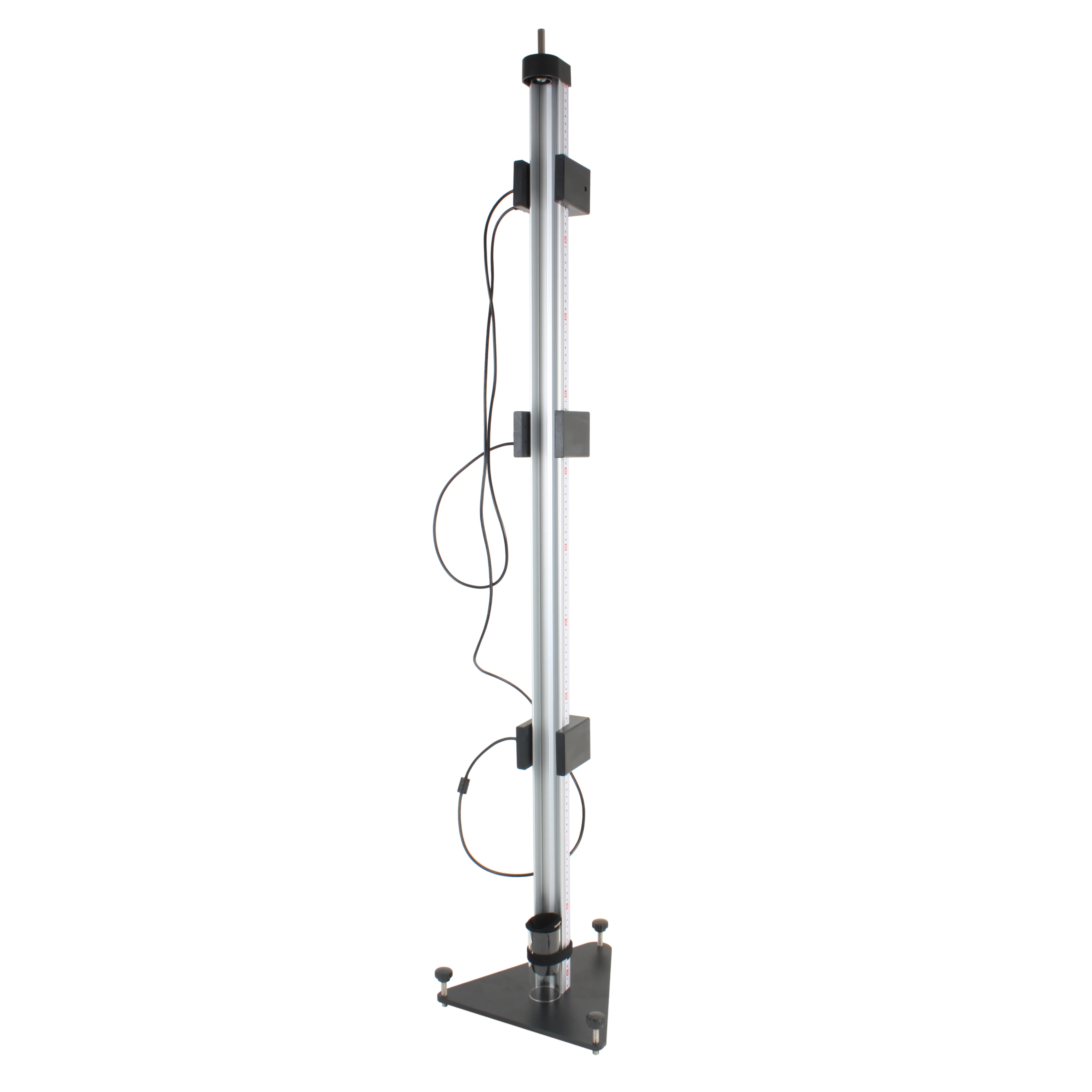
One of the most challenging abstract concepts in physics education involves the interconversion of potential and kinetic energy. Students frequently memorize formulas without grasping the physical reality these equations represent. Innovative school laboratory equipment designed for impact and free-fall experiments addresses this pedagogical gap by making energy transformation visible and measurable. Apparatus such as calibrated drop towers allow students to release objects from precisely measured heights, observe their acceleration, and calculate the resulting impact forces using integrated measurement systems. This hands-on approach transforms abstract energy equations into tangible experiences where students can physically witness how gravitational potential energy converts to kinetic energy and ultimately dissipates through impact.
The effectiveness of such school laboratory equipment lies in its ability to generate quantifiable data that students can analyze independently. When learners release a test mass from a known height and measure both the fall duration and impact force, they engage with multiple interconnected concepts simultaneously: gravitational acceleration, velocity increase over time, and the relationship between mass, velocity, and momentum. High-quality educational apparatus incorporates precision timing mechanisms and force sensors that provide accurate measurements, enabling students to verify theoretical predictions through experimental observation. This empirical validation process strengthens conceptual understanding far more effectively than abstract mathematical manipulation alone.
Visualizing Momentum and Impulse Through Controlled Collisions
Momentum conservation represents another abstract principle that becomes significantly more comprehensible through appropriate school laboratory equipment. Collision apparatus that allows controlled impact scenarios enables students to explore how momentum transfers between objects during interactions. By varying parameters such as mass, velocity, and collision elasticity, learners develop intuitive understanding of impulse-momentum relationships that remain purely theoretical in textbook-only instruction. Modern educational equipment designed for these investigations often features adjustable release mechanisms, interchangeable mass sets, and impact measurement systems that capture force-time data during collisions.
The pedagogical value of this school laboratory equipment extends beyond simple demonstration to encompass hypothesis formation and experimental design. When students can modify experimental conditions and observe resulting changes in momentum transfer, they engage in authentic scientific reasoning rather than merely following prescribed procedures. This investigative approach cultivates critical thinking skills alongside content knowledge, preparing students for advanced scientific study and professional research environments. Educational institutions that invest in versatile, adjustable apparatus create learning environments where curiosity drives exploration and empirical evidence shapes understanding.
Engineering Practical Understanding of Material Properties and Structural Behavior
Making Material Science Concepts Accessible Through Testing Equipment
Material science principles often remain abstract for students until they can directly observe how different substances respond to mechanical stress. School laboratory equipment designed for material testing transforms theoretical concepts such as elasticity, plasticity, and fracture mechanics into observable phenomena. Drop-test apparatus that allows systematic impact testing of various materials enables students to explore how molecular structure influences macroscopic behavior. By subjecting different specimens to controlled impact forces, learners discover firsthand why certain materials absorb energy through deformation while others resist impact through rigidity, concepts that remain disconnected from reality when presented only through molecular diagrams.
The integration of measurement technology into modern school laboratory equipment elevates these investigations from qualitative observation to quantitative analysis. When students can measure impact forces, deformation distances, and energy absorption characteristics, they develop sophisticated understanding of material performance metrics used throughout engineering disciplines. This practical familiarity with testing methodologies prepares students for technical careers while simultaneously deepening their conceptual grasp of structure-property relationships. Educational apparatus that combines robust construction with precise measurement capabilities provides the foundation for meaningful material science education at secondary and post-secondary levels.
Exploring Structural Engineering Principles Through Load Distribution Analysis
Structural engineering concepts become tangible when students can apply controlled forces to test specimens and observe resulting stress distributions. School laboratory equipment such as school laboratory equipment designed for impact testing allows exploration of how structures withstand dynamic loads, a principle fundamental to civil engineering yet difficult to grasp without hands-on experience. By testing structural components under various loading conditions, students discover why certain geometries resist failure more effectively than others, connecting abstract stress-strain relationships to practical design considerations that influence buildings, bridges, and mechanical systems throughout the built environment.
Educational benefits multiply when school laboratory equipment enables comparative analysis across multiple variables. Students investigating how beam thickness, material composition, or structural geometry affects load-bearing capacity engage in multivariable reasoning that mirrors professional engineering analysis. This experimental approach cultivates systems thinking skills as learners recognize that structural performance emerges from complex interactions among multiple factors rather than single isolated properties. Institutions that provide comprehensive experimental apparatus create learning environments where engineering principles transition from abstract theory to practical design intuition.
Enhancing Chemistry Education Through Reaction Observation and Measurement Systems
Making Molecular Interactions Visible Through Reaction Monitoring Equipment
Chemical reactions occur at molecular scales invisible to human observation, creating significant pedagogical challenges when teaching reaction kinetics and equilibrium principles. Innovative school laboratory equipment addresses this limitation by providing measurement systems that translate molecular-level changes into observable macroscopic data. Temperature sensors, pH monitors, and spectrophotometers transform abstract chemical processes into quantifiable measurements that students can track in real time. When learners observe temperature changes during exothermic reactions or monitor pH shifts during acid-base neutralizations, they develop concrete understanding of energy exchange and equilibrium dynamics that remain purely theoretical without appropriate measurement technology.
The pedagogical power of data-generating school laboratory equipment lies in its capacity to reveal relationships between experimental conditions and reaction outcomes. Students who systematically vary reactant concentrations, temperatures, or catalysts while monitoring reaction rates develop empirical understanding of factors controlling chemical kinetics. This investigative approach transforms chemistry education from memorization of reaction conditions to genuine comprehension of underlying principles governing molecular behavior. Educational institutions investing in comprehensive measurement systems empower students to function as practicing chemists conducting authentic investigations rather than merely following cookbook procedures.
Developing Quantitative Analysis Skills Through Precision Measurement Apparatus
Quantitative analysis forms the foundation of professional chemistry practice, yet students often struggle to develop accurate measurement techniques without appropriate school laboratory equipment. Precision balances, volumetric glassware, and analytical instruments transform qualitative chemical observations into rigorous quantitative data. When students prepare solutions to exact concentrations, measure reaction yields, or determine unknown substance identities through systematic testing, they develop laboratory skills essential for scientific and industrial careers. High-quality educational apparatus that provides reliable measurements builds student confidence while establishing procedural competence that transfers directly to professional laboratory environments.
The educational value of precision school laboratory equipment extends beyond technical skill development to encompass statistical reasoning and error analysis. Students who collect multiple measurements, calculate standard deviations, and evaluate experimental uncertainty develop sophisticated understanding of scientific methodology that distinguishes professional practice from casual observation. This emphasis on measurement quality and data reliability prepares learners for advanced research contexts where experimental rigor determines whether findings contribute meaningful knowledge or merely generate noise. Educational programs that prioritize precision measurement capability through appropriate equipment investment produce graduates equipped for demanding technical careers across scientific disciplines.
Advancing Biology Education Through Observation and Measurement Technologies
Revealing Microscopic Life Through Advanced Imaging Systems
Biological sciences present unique educational challenges because fundamental life processes occur at scales beyond unaided human perception. School laboratory equipment incorporating microscopy and imaging technologies makes cellular structures and microbial life visible to students, transforming abstract textbook diagrams into observable reality. When learners examine living cells, observe mitosis in progress, or identify microorganisms in environmental samples, they develop concrete understanding of biological organization that cannot emerge from illustration study alone. Modern digital microscopy systems that project magnified images to entire classes democratize access to microscopic observation, ensuring all students experience biological phenomena rather than waiting for individual viewing opportunities at limited instrument stations.
The integration of measurement capabilities into biological school laboratory equipment elevates observational study to quantitative investigation. Digital imaging systems that allow students to measure cell dimensions, count organelles, or track movement patterns transform qualitative description into rigorous data collection. This quantitative approach prepares students for contemporary biological research where image analysis and statistical evaluation drive scientific conclusions. Educational institutions that provide advanced imaging systems with measurement functionality create learning environments aligned with professional biological practice rather than outdated purely observational approaches.
Understanding Physiological Processes Through Functional Measurement Equipment
Physiological concepts such as respiration, circulation, and metabolism remain abstract until students can measure these processes directly. School laboratory equipment designed for physiological monitoring allows learners to collect data on heart rate, breathing patterns, metabolic rates, and other vital functions, connecting abstract biological concepts to tangible personal experiences. When students monitor their own cardiovascular responses to exercise or measure metabolic rates under different conditions, they develop embodied understanding of physiological regulation that transcends textbook knowledge. This personal connection to experimental data creates memorable learning experiences that persist far beyond typical classroom instruction.
Educational benefits multiply when physiological measurement school laboratory equipment enables comparative analysis across conditions or populations. Students investigating how environmental factors, activity levels, or dietary inputs affect metabolic rates engage with experimental design principles while exploring physiological concepts. This integrated approach develops both content knowledge and research methodology skills, preparing students for advanced biological study and health sciences careers. Institutions providing comprehensive physiological measurement capabilities create learning environments where abstract biological principles become personally relevant and empirically verifiable through direct investigation.
Implementing Effective Laboratory-Based Learning Through Equipment Selection and Program Design
Aligning Equipment Capabilities With Curriculum Objectives
Successful integration of innovative school laboratory equipment requires careful alignment between apparatus capabilities and specific learning objectives. Educational institutions must evaluate equipment not merely for technical sophistication but for pedagogical appropriateness relative to student developmental levels and curriculum standards. Apparatus that provides excessive complexity may overwhelm learners and obscure fundamental concepts, while overly simplified equipment fails to challenge students or prepare them for advanced study. Effective equipment selection balances accessibility with rigor, ensuring students can operate apparatus independently while generating data sufficient for meaningful scientific investigation.
The evaluation process for school laboratory equipment should emphasize versatility and adaptability across multiple instructional contexts. Multi-functional apparatus that supports investigations across various topics provides greater educational value than single-purpose instruments with limited application. Equipment allowing parameter adjustment, variable configuration, and progressive complexity enables instructors to design differentiated learning experiences accommodating diverse student abilities within single classrooms. Educational institutions that prioritize flexible, adaptable equipment maximize instructional effectiveness while optimizing resource allocation across departmental programs and grade levels.
Developing Comprehensive Laboratory Programs That Emphasize Inquiry-Based Learning
The educational impact of innovative school laboratory equipment depends critically on pedagogical approaches guiding its implementation. Equipment alone cannot transform science education; instructional strategies must shift from demonstration-focused teaching to inquiry-driven investigation where students formulate questions, design experiments, and interpret data independently. Effective laboratory programs provide structured guidance while preserving opportunities for student-directed exploration, creating learning environments where apparatus serves as tools for discovery rather than props for instructor demonstrations. This inquiry-based approach develops scientific reasoning skills alongside content knowledge, preparing students for academic and professional contexts requiring independent problem-solving capabilities.
Professional development supporting effective use of school laboratory equipment represents essential investment accompanying equipment acquisition. Instructors require training not only in apparatus operation but in pedagogical strategies maximizing investigative learning opportunities. Workshops emphasizing question formulation, experimental design, and data interpretation methodologies help educators transition from traditional verification laboratories to authentic inquiry experiences. Educational institutions that combine equipment investment with comprehensive professional development create sustainable programs where innovative apparatus fulfills its pedagogical potential rather than remaining underutilized due to instructor uncertainty or adherence to traditional teaching patterns.
Ensuring Safety While Maximizing Hands-On Engagement
Laboratory safety considerations must inform school laboratory equipment selection and implementation without unnecessarily restricting student engagement. Modern educational apparatus incorporates safety features such as enclosed mechanisms, automatic shutoffs, and protective barriers that minimize hazards while preserving hands-on interaction opportunities. Equipment design that prioritizes both safety and accessibility enables students to conduct genuine investigations without excessive instructor intervention or restrictive safety protocols that transform active learning into passive observation. Effective safety management balances risk mitigation with educational objectives, ensuring students develop laboratory competence through supervised practice rather than observation alone.
Comprehensive safety training integrated with equipment instruction ensures students understand both operational procedures and underlying safety principles. When learners comprehend why specific safety protocols exist rather than merely following rules, they develop judgment enabling safe practice in novel situations beyond prescribed procedures. This understanding-based approach to laboratory safety prepares students for professional research environments where independent judgment determines safe practice. Educational programs that emphasize safety reasoning alongside procedural compliance produce graduates equipped with both technical skills and professional safety consciousness essential for scientific careers.
FAQ
What types of scientific concepts become more understandable through innovative school laboratory equipment?
Innovative school laboratory equipment particularly enhances understanding of abstract concepts involving energy transformation, force interactions, material properties, chemical reactions, and biological processes occurring at microscopic scales. Physics concepts such as potential and kinetic energy conversion, momentum transfer, and acceleration become tangible through apparatus allowing controlled experiments with measurable outcomes. Chemistry principles including reaction kinetics, equilibrium, and quantitative analysis transform from abstract theory to observable phenomena through precision measurement equipment. Biology concepts involving cellular structures, physiological processes, and metabolic functions become concrete through microscopy and physiological monitoring systems that make invisible processes visible and measurable.
How does hands-on laboratory equipment improve long-term retention compared to traditional instruction methods?
Research in educational psychology consistently demonstrates that active learning experiences produce stronger memory consolidation and deeper conceptual understanding than passive lecture-based instruction. When students physically manipulate school laboratory equipment, collect data, and draw conclusions from experimental observations, they engage multiple cognitive processes simultaneously including motor skills, visual processing, and analytical reasoning. This multi-modal engagement creates stronger neural pathways than single-channel learning through reading or listening alone. Additionally, the problem-solving aspects of hands-on laboratory work require students to apply concepts actively rather than merely recognize information, strengthening transfer of knowledge to novel situations and supporting long-term retention beyond examination periods.
What factors should educational institutions prioritize when selecting school laboratory equipment for maximum pedagogical impact?
Educational institutions should prioritize equipment versatility, measurement precision, safety features, and alignment with specific curriculum objectives when selecting school laboratory equipment. Versatile apparatus supporting multiple investigation types across various topics provides greater educational value than single-purpose instruments. Precision sufficient for generating reliable data enables meaningful quantitative analysis while building student confidence in experimental methodology. Integrated safety features allow hands-on engagement without excessive risk, maintaining the active learning benefits that justify laboratory-based instruction. Most importantly, equipment capabilities must match specific learning objectives at appropriate developmental levels, ensuring apparatus accessibility while providing sufficient complexity to challenge students and support rigorous scientific investigation preparing them for advanced study.
How can schools maximize the educational return on investment from innovative laboratory equipment?
Maximizing educational impact from school laboratory equipment requires comprehensive implementation strategies extending beyond equipment purchase to include instructor professional development, curriculum integration planning, and inquiry-based pedagogical approaches. Institutions should invest in training programs helping educators transition from demonstration-focused teaching to facilitation of student-directed investigation, ensuring apparatus supports authentic scientific inquiry rather than prescribed verification exercises. Developing progressive laboratory sequences that build experimental skills across grade levels maximizes equipment utilization while supporting cumulative learning. Additionally, schools should select durable, maintainable equipment with comprehensive support resources including instructional guides, replacement parts availability, and technical assistance, ensuring apparatus remains functional and pedagogically relevant throughout its expected service life rather than becoming obsolete through neglect or inadequate maintenance.
Table of Contents
- Transforming Physics Education Through Kinetic Energy Demonstration Equipment
- Engineering Practical Understanding of Material Properties and Structural Behavior
- Enhancing Chemistry Education Through Reaction Observation and Measurement Systems
- Advancing Biology Education Through Observation and Measurement Technologies
- Implementing Effective Laboratory-Based Learning Through Equipment Selection and Program Design
-
FAQ
- What types of scientific concepts become more understandable through innovative school laboratory equipment?
- How does hands-on laboratory equipment improve long-term retention compared to traditional instruction methods?
- What factors should educational institutions prioritize when selecting school laboratory equipment for maximum pedagogical impact?
- How can schools maximize the educational return on investment from innovative laboratory equipment?