
 EN
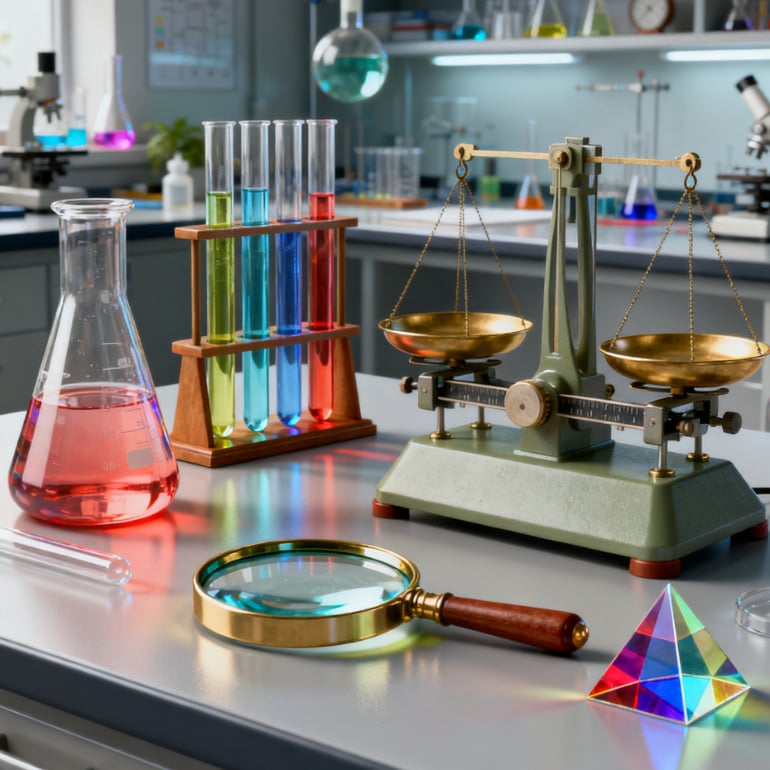
Science equipment forms the backbone of effective practical learning in educational institutions worldwide. When students interact directly with science equipment, they move beyond passive note-taking and textbook memorization into active discovery and real-world application. This transformation from theoretical knowledge to hands-on experience fundamentally reshapes how students understand scientific principles and retain complex concepts for long-term academic success.
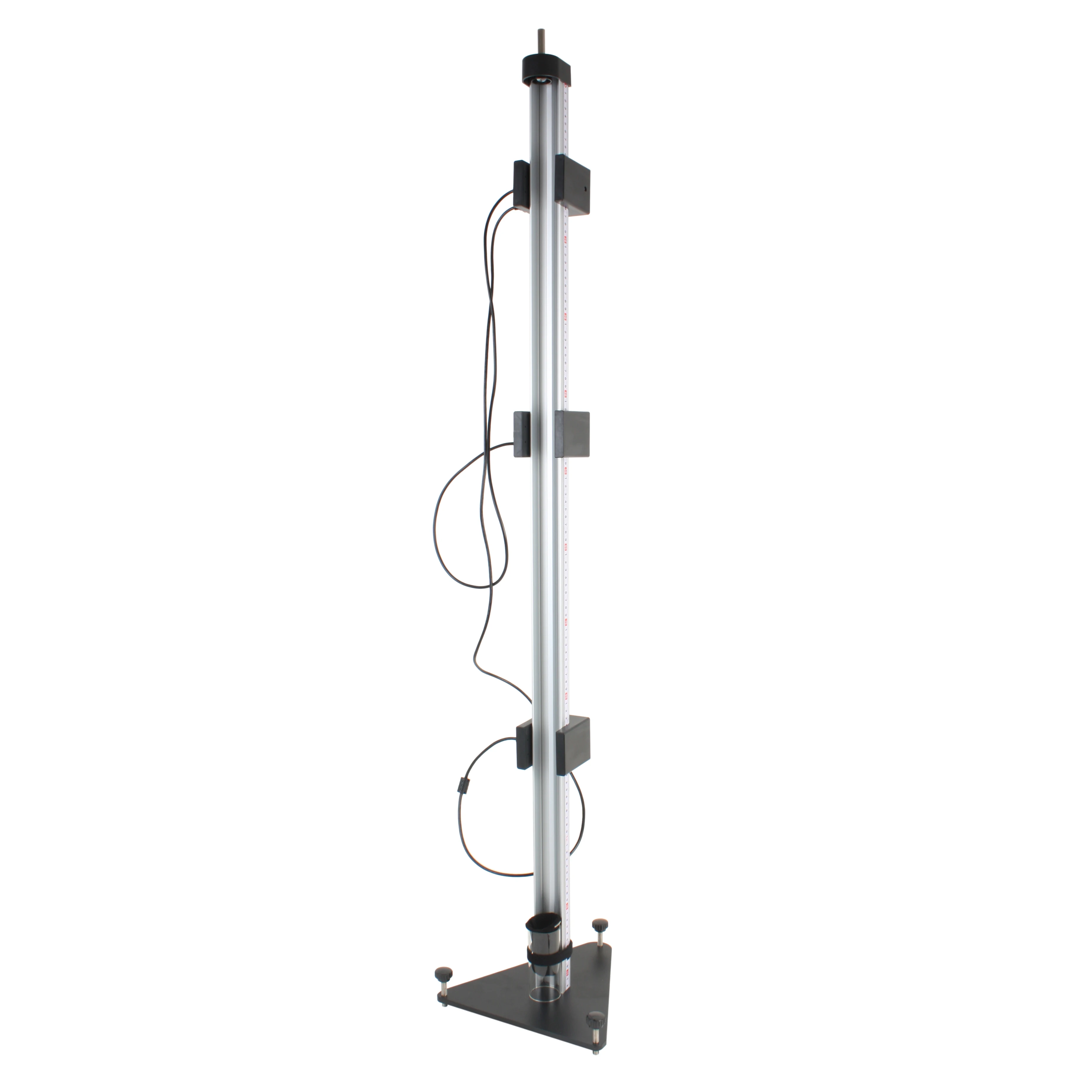
The role of science equipment in modern education extends far beyond simple classroom demonstrations. Quality science equipment enables students to conduct reproducible experiments, collect accurate data, and develop critical analytical skills. When institutions invest in proper science equipment, they create learning environments where curiosity thrives, scientific thinking becomes natural, and students develop genuine confidence in their ability to solve problems using evidence-based methods.
How Science Equipment Strengthens Conceptual Understanding
Bridging Theory and Observable Reality
Science equipment serves as the crucial bridge between abstract theoretical concepts and tangible, observable phenomena. When students use science equipment to witness physical laws in action—whether observing gravitational effects, measuring force and motion, or conducting chemical reactions—they build mental models rooted in direct experience rather than imagination. This concrete foundation makes abstract principles stick in student memory significantly longer than lecture-based learning alone.
For example, when students use precision science equipment to measure acceleration during free-fall experiments, they transform Newton's laws from mathematical abstractions into visible, measurable realities. The science equipment becomes the translator between equations on paper and the physical world students inhabit. This direct observation through science equipment strengthens neural pathways associated with scientific reasoning and creates lasting cognitive frameworks that support future learning.
Enabling Hands-On Experiential Learning
Hands-on interaction with science equipment activates multiple learning pathways simultaneously—visual, kinesthetic, and cognitive. When students manipulate science equipment, adjust variables, and observe immediate results, they engage deeper brain regions compared to passive listening. This multisensory engagement through science equipment creates stronger memory encoding and faster recall when students encounter related concepts later in their academic journey.
Quality science equipment specifically designed for educational purposes provides the precision and reliability necessary for students to draw valid conclusions from their experiments. When science equipment produces accurate, consistent results, students learn to trust empirical evidence and develop genuine scientific skepticism. They learn to distinguish between correlation and causation through repeated, controlled observations using proper science equipment.
Science Equipment's Impact on Student Engagement and Motivation
Creating Active Learning Environments
Science equipment transforms passive classrooms into dynamic learning environments where student curiosity becomes the driving force. When students have access to functional, well-maintained science equipment, they naturally develop higher intrinsic motivation because they feel like real scientists conducting genuine investigations. This shift from passive consumption to active participation through science equipment use dramatically increases student engagement and reduces classroom management challenges.
The psychological impact of working with science equipment extends beyond the classroom. Students who regularly interact with quality science equipment develop stronger self-efficacy in science subjects. They begin to see themselves as capable of understanding complex phenomena and solving scientific problems. This identity shift, catalyzed by hands-on experience with science equipment, often influences career path decisions and long-term academic achievement across multiple subjects.
Building Confidence Through Success
When students successfully conduct experiments using reliable science equipment and achieve expected results, they experience genuine accomplishment. Each successful investigation with science equipment reinforces their confidence and motivates them to tackle increasingly challenging investigations. This positive feedback loop, powered by access to quality science equipment, creates enthusiastic learners who actively seek scientific knowledge rather than passively receiving it.
Science equipment that consistently works as intended removes frustration barriers that often discourage students. Malfunctioning or imprecise science equipment often teaches students to distrust empirical methods and reinforces the false belief that science is beyond their capability. Investing in reliable science equipment directly translates to reduced frustration, increased motivation, and improved learning outcomes across entire student populations.
Developing Essential Scientific Skills Through Science Equipment
Cultivating Data Literacy and Critical Analysis
Working with science equipment teaches students to collect data systematically, recognize measurement uncertainty, and draw evidence-based conclusions. These skills—central to all scientific work—become internalized through repeated practice with science equipment. Students learn to ask questions about their data, identify anomalies, and design follow-up investigations to test hypotheses, all within the context of using actual science equipment rather than simulations.
Quality science equipment introduces students to precision measurement and the importance of calibration and validation. When students use science equipment that requires careful handling and proper technique, they develop attention to detail and understanding of why scientific methods demand rigor. These habits of mind, developed through hands-on science equipment use, transfer to other academic domains and provide competitive advantages in college and career preparation.
Fostering Collaborative Problem-Solving
Science equipment often requires multiple students to collaborate in its operation and data collection. This collaborative necessity naturally promotes teamwork, communication, and shared problem-solving. When student groups troubleshoot science equipment issues together, they develop soft skills essential for modern workplaces—negotiation, leadership, and collective decision-making all emerge naturally from the shared challenge of conducting successful experiments with science equipment.
The social dimension of science equipment use also creates peer teaching opportunities where students with stronger grasp of concepts help others master experimental procedures. This peer instruction, grounded in the concrete reality of science equipment operation, often produces deeper understanding than teacher-led explanation alone because students translate concepts into language their peers actually understand.
FAQ
What types of science equipment are most essential for enhancing learning outcomes?
Essential science equipment varies by educational level and subject area, but typically includes precision measurement tools, observation instruments like microscopes, and apparatus for conducting controlled experiments. For physics education, science equipment like force sensors, motion detectors, and apparatus for studying mechanics and energy transfer prove particularly valuable. For chemistry, science equipment including graduated cylinders, burettes, and reaction vessels enables accurate data collection. For biology, microscopes and dissection kits represent core science equipment. The key is choosing science equipment that enables direct observation and measurable results rather than equipment primarily useful for demonstrations.
How does science equipment impact student performance on standardized assessments?
Research consistently demonstrates that schools investing in quality science equipment see improved performance on standardized science assessments. Students who regularly use science equipment develop stronger conceptual understanding and problem-solving abilities that transfer to written assessments. Furthermore, exposure to science equipment familiarizes students with experimental terminology and reasoning patterns featured in standardized tests. Science equipment also reduces test anxiety by building genuine competence and confidence rather than relying solely on memorization strategies.
Can science equipment improve outcomes for students who struggle with science subjects?
Absolutely. Science equipment often reaches struggling students more effectively than traditional instruction because it accommodates diverse learning styles and reduces language barriers inherent in textbook learning. Students who struggle with reading comprehension but possess strong visual or kinesthetic learning preferences often excel when learning is mediated through science equipment. Additionally, the success and engagement fostered by hands-on science equipment use frequently reignites interest in science for previously disengaged students, creating positive momentum that extends beyond science classes.