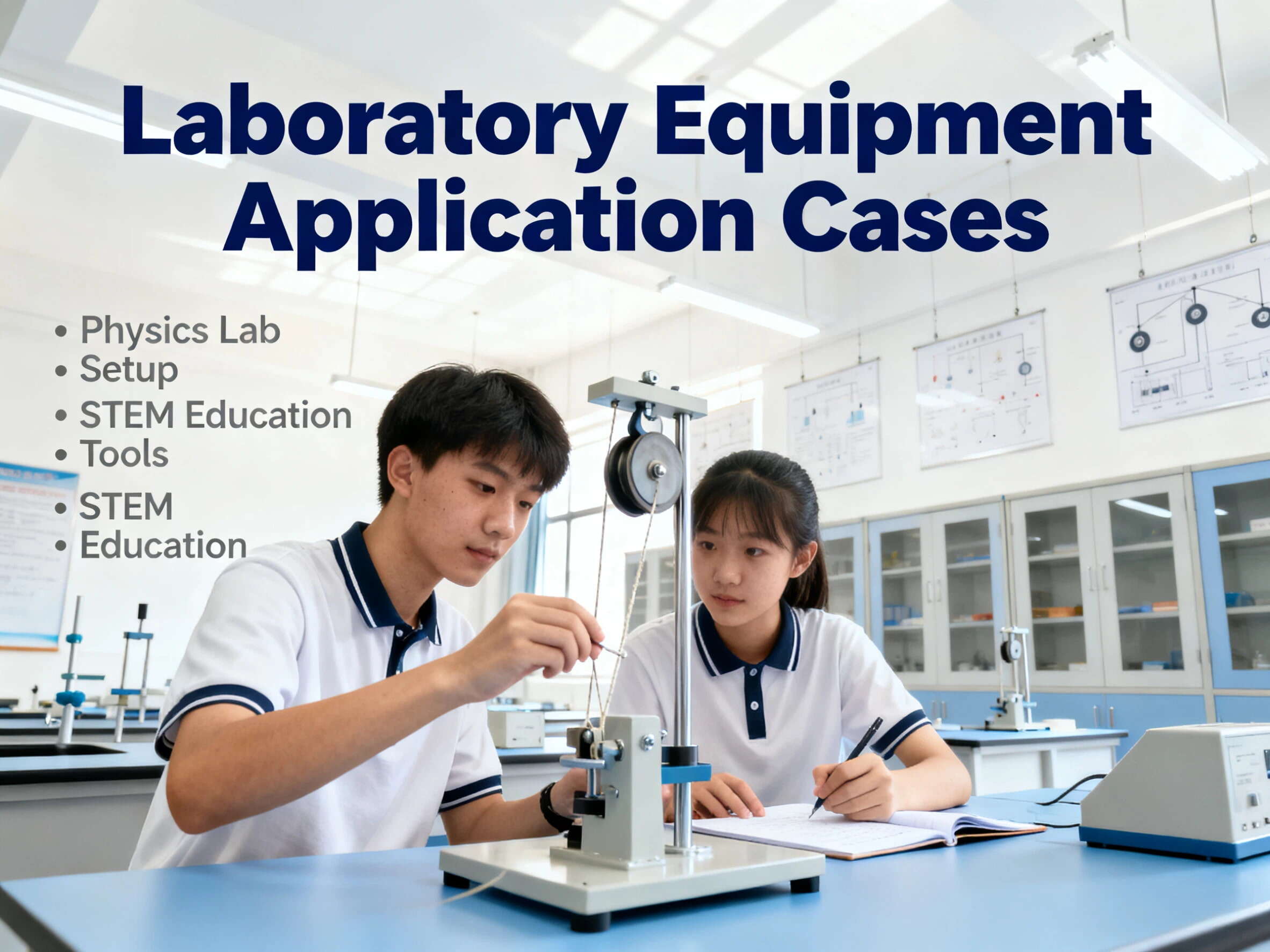
physics educational kits
Physics educational kits represent a revolutionary approach to science learning, combining theoretical concepts with hands-on experimentation to create engaging educational experiences. These comprehensive learning systems are meticulously designed to bridge the gap between abstract physics principles and tangible understanding through interactive demonstrations and experiments. Modern physics educational kits encompass a wide range of scientific domains, including mechanics, electricity, magnetism, optics, thermodynamics, and wave phenomena, providing students with immersive learning opportunities that traditional textbook-based education cannot match. The primary function of physics educational kits is to transform complex theoretical concepts into accessible, visual, and tactile learning experiences. These kits typically include precision-engineered components such as measurement instruments, experimental apparatus, comprehensive instruction manuals, and digital interfaces that facilitate real-time data collection and analysis. Students can construct circuits, observe electromagnetic phenomena, measure forces and motion, investigate light properties, and explore energy transformations through carefully designed experiments. Technologically, modern physics educational kits incorporate cutting-edge features including digital sensors, wireless connectivity, computer interfaces, and mobile applications that enhance the learning experience. Many kits feature Arduino-based microcontrollers, Bluetooth connectivity, and cloud-based data storage capabilities, allowing students to collect, analyze, and share experimental data seamlessly. The integration of augmented reality elements and virtual simulation software further enriches the educational experience, enabling students to visualize phenomena that would otherwise be impossible to observe directly. Applications of physics educational kits span multiple educational levels, from elementary science exploration to advanced university laboratory work. Elementary students use simplified versions to discover basic principles through play-based learning, while high school students engage with more sophisticated equipment to conduct quantitative experiments. University programs utilize professional-grade physics educational kits for advanced research projects and laboratory coursework. These versatile tools also serve professional development programs, teacher training initiatives, and STEM outreach programs, making physics accessible to diverse audiences and promoting scientific literacy across communities.



 EN
EN