
 EN
EN
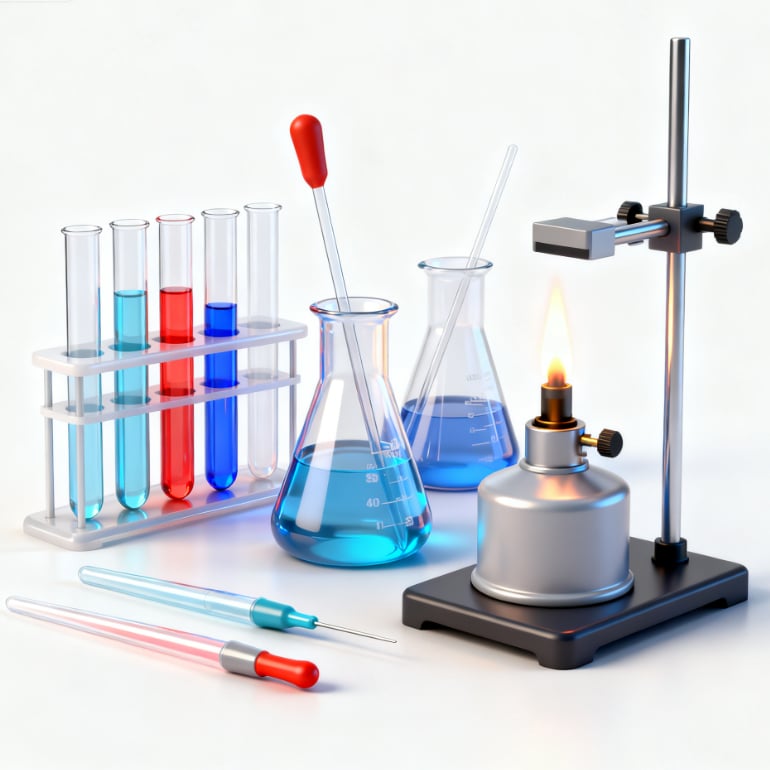
The foundation of every successful experiment rests on one critical factor: the reliability and precision of the tools used to measure, analyze, and observe. Accurate science equipment is not simply a luxury for well-funded laboratories; it is an absolute necessity for producing valid, reproducible, and trustworthy scientific results. When researchers, educators, and industrial professionals work with substandard or imprecise instruments, they risk invalidating entire research projects, wasting resources, and compromising the integrity of their findings.
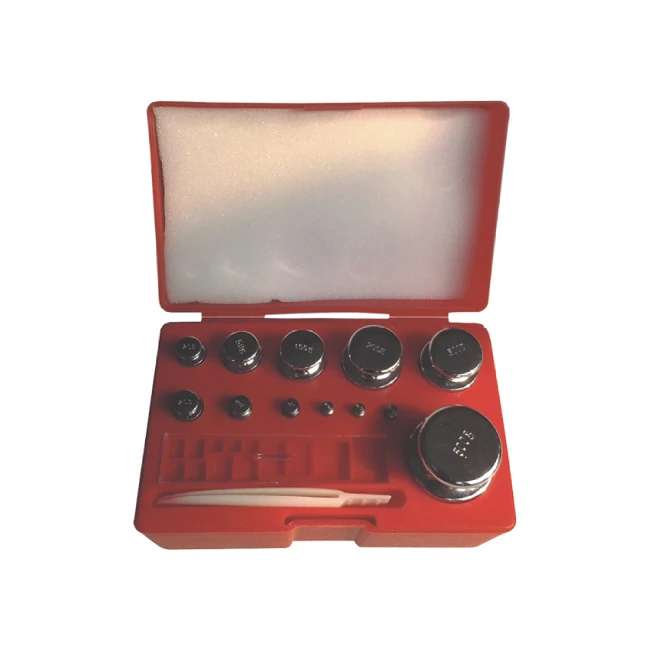
In today's scientific and industrial landscape, where precision drives innovation and regulatory compliance demands accuracy, investing in accurate science equipment has become non-negotiable. Whether you are conducting fundamental research, teaching laboratory sciences, or performing quality control in manufacturing, the accuracy of your measurements directly influences the validity of your conclusions and the safety of your applications. Understanding why accurate science equipment matters and how it impacts experimental outcomes is essential for anyone involved in scientific work.
The Impact of Measurement Precision on Experimental Validity
How Precision Shapes Research Conclusions
Every measurement in an experiment carries inherent uncertainty, and the quality of accurate science equipment determines the magnitude of that uncertainty. When you use precise instruments, the margin of error shrinks, allowing you to detect subtle effects, confirm hypotheses, and draw meaningful conclusions from your data. Conversely, relying on inaccurate science equipment inflates measurement uncertainty, obscuring true experimental signals and leading to false negatives or misleading results.
The relationship between instrument accuracy and research validity is direct and unforgiving. A balance that reads weights incorrectly, a thermometer that misrepresents temperature, or a spectrophotometer that produces erratic readings will corrupt every data point collected. These errors compound through analysis and interpretation, ultimately compromising the credibility of the entire study. This is why peer-reviewed journals, regulatory agencies, and institutional review boards all mandate the use of calibrated, traceable accurate science equipment in their protocols.
Reproducibility and the Role of Equipment Consistency
Scientific progress depends on reproducibility—the ability for other researchers to repeat your work and obtain the same results. Accurate science equipment is essential for achieving reproducibility because it ensures that measurements are consistent, comparable, and independent of the individual operator or the specific time of measurement. When different laboratories use well-maintained, calibrated accurate science equipment, they can confidently compare results and build upon each other's findings.
Poor equipment, by contrast, introduces systematic bias and variability that makes it impossible for others to replicate your findings. A poorly calibrated pH meter, for instance, might consistently read 0.5 units too high, creating a hidden systematic error that invalidates all downstream conclusions. Other researchers using correctly calibrated instruments will obtain different results, raising questions about the original work's integrity. Accurate science equipment eliminates these hidden sources of error and establishes a level playing field for scientific collaboration and validation.
Resource Efficiency and Cost-Benefit of Quality Instruments
Minimizing Waste Through Accurate Measurements
Poor accuracy in science equipment often appears to save money in the short term, but the hidden costs are substantial. In chemistry, pharmaceutical development, and materials science, incorrect measurements lead to failed experiments, wasted reagents, and repeated trials. A balance with poor accuracy might cause you to prepare solutions with incorrect concentrations, requiring you to start over and consume expensive chemicals and technician time. Over time, these losses dwarf the initial savings from purchasing cheaper, less accurate science equipment.
Accurate science equipment delivers measurable returns through reduced waste, faster troubleshooting, and higher first-pass success rates. In manufacturing quality control, a precise scale ensures that products meet specifications, reducing the risk of recalls, customer returns, and regulatory penalties. In pharmaceutical manufacturing, accurate science equipment for dosing, mixing, and testing prevents costly batch failures and ensures compliance with strict regulatory standards. The investment in accurate science equipment pays for itself through improved efficiency and risk mitigation.
Regulatory Compliance and Risk Management
Industries governed by regulatory bodies—pharmaceuticals, food safety, environmental monitoring, and medical devices—require documented proof that all measurements meet established accuracy standards. These regulations mandate the use of calibrated accurate science equipment, regular validation, and detailed records of all measurements. Failure to maintain accurate science equipment and documentation can result in failed audits, product recalls, legal liability, and loss of market access.
Beyond regulatory mandates, accurate science equipment protects your organization's reputation and bottom line. A single incident caused by measurement error—a contaminated batch, a mislabeled product, or an environmental violation—can trigger investigations, fines, lawsuits, and irreversible damage to credibility. Companies that invest in accurate science equipment and proper calibration protocols demonstrate a commitment to quality and risk management that resonates with customers, regulators, and stakeholders.
Building Confidence in Scientific and Industrial Applications
Establishing Trust in Data and Decision-Making
In scientific research, education, and industrial applications, stakeholders rely on data to make critical decisions. Whether you are publishing research, informing clinical treatments, optimizing manufacturing processes, or guiding policy recommendations, the quality of your data determines the reliability of those decisions. Accurate science equipment is the foundation of data integrity, allowing you to present findings with confidence and defend them against scrutiny.
When you use accurate science equipment, you are not only obtaining correct numbers; you are making a statement about your commitment to excellence and truthfulness. This builds trust with your audience—whether they are journal editors, laboratory managers, customers, or regulatory inspectors. Data generated using well-maintained, calibrated accurate science equipment carries inherent credibility and is far more likely to influence decisions, secure funding, and advance knowledge.
Supporting Innovation and Scientific Discovery
Breakthrough discoveries in science often arise from subtle observations—differences in measurements that reveal unexpected phenomena. Accurate science equipment enables researchers to detect these subtle signals, test bold hypotheses, and push the boundaries of human knowledge. Without the precision that accurate science equipment provides, many important discoveries would remain hidden in the noise of measurement error.
In fields like materials science, biotechnology, and environmental science, cutting-edge innovation demands the highest levels of measurement precision. Researchers working on nanotechnology, genetic sequencing, and climate modeling all depend on accurate science equipment to produce the precise measurements required to advance their fields. Investing in accurate science equipment is an investment in the future, enabling your organization or research team to compete at the highest levels and contribute meaningfully to scientific progress.
FAQ
What determines whether science equipment is accurate enough for my work?
The accuracy requirements for accurate science equipment depend on the specific application, regulatory standards, and scientific goals. Start by reviewing your experimental protocol, industry standards, and regulatory requirements to determine the necessary precision. Most scientific equipment comes with specification sheets indicating accuracy ranges, uncertainty budgets, and calibration intervals. Consult with your institution's quality assurance team or equipment manufacturers to ensure that your accurate science equipment meets these requirements. Regular calibration against traceable standards confirms that your instruments maintain their accuracy over time.
How often should accurate science equipment be calibrated?
Calibration frequency for accurate science equipment depends on the instrument type, manufacturer recommendations, usage intensity, and regulatory requirements. Many analytical instruments require annual or biannual calibration, while some precision balances may need quarterly checks. High-use equipment in industrial settings often requires more frequent calibration than instruments in academic laboratories. Establish a documented calibration schedule for all your accurate science equipment, track calibration dates and results, and replace or repair instruments that drift outside acceptable tolerances. This proactive approach ensures that your accurate science equipment remains reliable and supports consistent data quality.
Why is calibration important for maintaining accurate science equipment?
Calibration is the process of comparing an instrument's measurements against a known reference standard to verify and adjust accuracy. Over time, all instruments drift due to wear, temperature changes, and normal use, so regular calibration of accurate science equipment is essential for maintaining measurement integrity. Without calibration, you cannot know whether your measurements are reliable or whether undetected errors have accumulated. Documented calibration provides proof of accuracy for regulatory compliance, peer review, and quality assurance. Investing in regular calibration of your accurate science equipment is a fundamental requirement for scientific credibility and operational excellence.