
Setting up a new school laboratory requires careful planning and comprehensive understanding of the essential laboratory equipment needed to create an effective learning environment. Whether you're establishing a chemistry lab, biology lab, or general science facility, having the right laboratory equipment ensures students receive hands-on experience that reinforces theoretical concepts and develops practical skills crucial for scientific understanding.

The process of selecting appropriate laboratory equipment for educational institutions involves balancing educational objectives with budget constraints while maintaining safety standards and operational efficiency. This comprehensive guide outlines the fundamental laboratory equipment categories and specific items that form the backbone of any well-equipped school science laboratory, helping educators and administrators make informed decisions about their equipment investments.
Basic Laboratory Equipment Categories
Measurement and Analysis Equipment
Accurate measurement forms the foundation of all scientific work, making precision measurement laboratory equipment indispensable for any school lab. Digital balances and analytical scales provide students with the ability to measure mass with varying degrees of precision, from basic classroom demonstrations to more advanced quantitative analysis experiments.
Volumetric laboratory equipment including graduated cylinders, burettes, pipettes, and volumetric flasks enable precise liquid measurements essential for chemistry experiments and solution preparations. These tools teach students proper measurement techniques while ensuring experimental accuracy and reproducibility in their scientific investigations.
pH meters and conductivity meters represent essential electronic laboratory equipment that introduces students to modern analytical techniques. These instruments provide accurate measurements of solution properties and help students understand the relationship between chemical composition and measurable physical properties.
Heating and Temperature Control Equipment
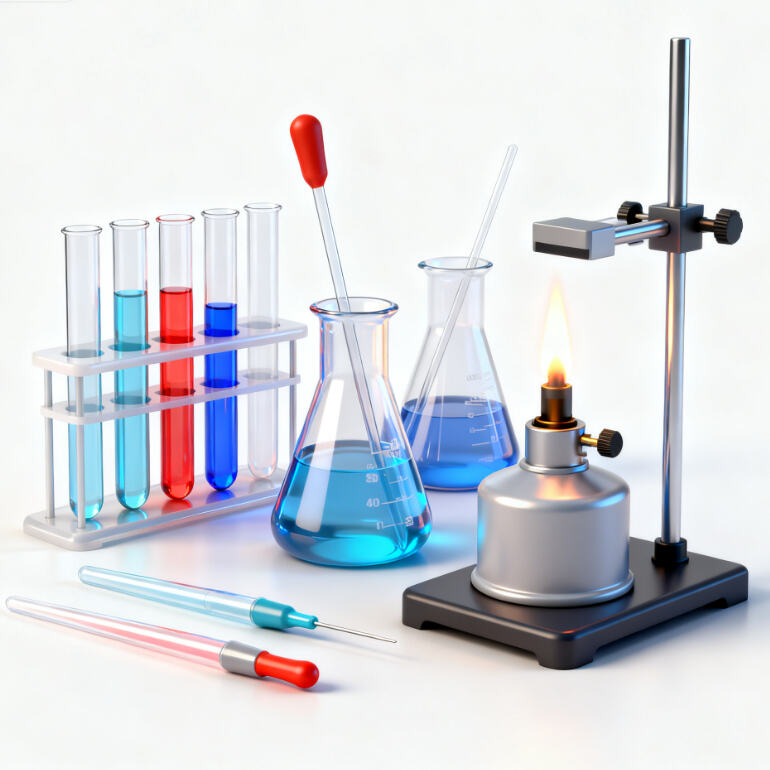
Temperature control represents a critical aspect of many scientific experiments, making heating laboratory equipment essential for comprehensive science education. Bunsen burners remain fundamental tools for introducing students to controlled heating techniques, flame tests, and basic thermal chemistry principles.
Hot plates with magnetic stirrers combine heating capabilities with mixing functions, providing versatile laboratory equipment suitable for solution preparation and controlled reaction conditions. These devices offer safer alternatives to open flames while maintaining precise temperature control necessary for many experiments.
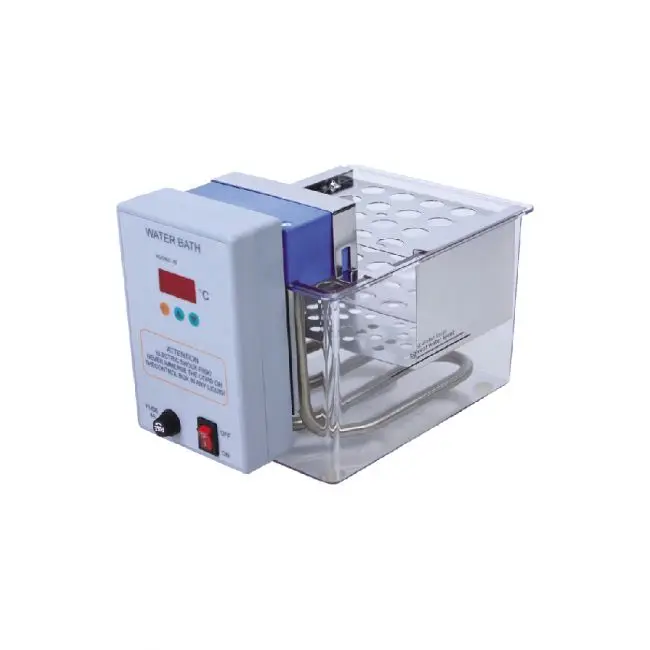
Water baths and heating mantles provide controlled heating environments for temperature-sensitive reactions and procedures. This laboratory equipment ensures uniform heat distribution and maintains stable temperatures over extended periods, crucial for many biological and chemical processes studied in educational settings.
Safety and Protective Laboratory Equipment
Personal Protective Equipment
Safety goggles and protective eyewear represent the most fundamental safety laboratory equipment in any educational science facility. These protective devices prevent chemical splashes, flying particles, and harmful light exposure from reaching students' eyes during experimental work.
Laboratory coats and aprons provide essential body protection against chemical spills and splashes. This protective laboratory equipment also helps establish professional laboratory behavior and reinforces the importance of safety protocols in scientific environments.
Chemical-resistant gloves in various materials accommodate different experimental requirements and chemical compatibilities. Having appropriate protective laboratory equipment available ensures students can safely handle various substances while learning proper safety procedures.
Emergency Safety Equipment
Emergency shower and eyewash stations constitute critical safety laboratory equipment for any facility handling hazardous materials. These installations provide immediate decontamination capabilities and represent essential safety infrastructure required by most educational safety regulations.
Fire extinguishers specifically designed for laboratory fires, including Class B and Class C extinguishers, provide essential emergency response capabilities. This safety laboratory equipment must be strategically located and regularly maintained to ensure proper function during emergencies.
Fume hoods and ventilation systems remove hazardous vapors and gases from the laboratory environment. This protective laboratory equipment enables safe handling of volatile chemicals and ensures adequate air quality for student and staff health.
Specialized Laboratory Equipment by Subject Area
Chemistry Laboratory Equipment
Distillation apparatus including distillation flasks, condensers, and receiving flasks enable students to learn separation techniques fundamental to chemistry education. This specialized laboratory equipment demonstrates phase changes and purification methods while providing hands-on experience with complex experimental setups.
Reaction vessels such as round-bottom flasks, Erlenmeyer flasks, and beakers in various sizes accommodate different experimental scales and reaction types. Having appropriate glassware laboratory equipment ensures students can conduct experiments safely while learning proper handling techniques for different vessel types.
Centrifuges provide separation capabilities based on density differences, introducing students to modern separation techniques used in both analytical and preparative chemistry. This laboratory equipment demonstrates principles of physics while providing practical separation capabilities for various experiments.
Biology Laboratory Equipment
Microscopes represent perhaps the most iconic biology laboratory equipment, enabling students to explore cellular structures and microorganisms. Compound light microscopes with multiple objective lenses provide varying magnification levels suitable for different biological specimens and educational objectives.
Incubators maintain controlled temperature and humidity conditions necessary for growing bacterial cultures and conducting biological experiments. This specialized laboratory equipment enables students to study microbiology and observe biological processes over extended time periods.
Refrigerators and freezers designed for laboratory use store biological specimens, reagents, and cultures at appropriate temperatures. This storage laboratory equipment maintains sample integrity and enables longer-term experiments and specimen preservation.
Storage and Organization Solutions
Chemical Storage Systems
Chemical storage cabinets designed for different hazard classifications ensure safe separation and containment of laboratory reagents. This organizational laboratory equipment prevents incompatible chemical interactions while maintaining easy access for educational activities.
Flammable liquid storage cabinets provide fire-resistant containment for volatile solvents and other flammable materials. Having appropriate storage laboratory equipment reduces fire risks while maintaining compliance with safety regulations and insurance requirements.
Acid and base storage systems with corrosion-resistant materials protect both the chemicals and the surrounding environment from degradation. This specialized laboratory equipment ensures chemical stability while preventing accidental mixing of incompatible substances.
General Storage and Organization
Laboratory carts and mobile storage units provide flexible organization solutions that adapt to changing experimental needs. This portable laboratory equipment enables efficient setup and cleanup procedures while maximizing laboratory space utilization.
Desiccators and humidity control equipment protect moisture-sensitive materials and reagents from environmental degradation. This preservation laboratory equipment ensures chemical stability and extends the useful life of expensive reagents and samples.
Inventory management systems, whether digital or physical, help track laboratory equipment location, condition, and maintenance schedules. Effective organization ensures maximum utilization of available resources while preventing loss or damage to expensive equipment.
FAQ
What is the minimum laboratory equipment needed to start a basic school science lab?
A basic school science lab requires essential safety equipment including goggles and lab coats, basic glassware such as beakers and graduated cylinders, a digital balance, hot plates or Bunsen burners, a microscope for biology work, and appropriate chemical storage solutions. This fundamental laboratory equipment provides the foundation for most introductory science experiments while maintaining safety standards.
How should schools prioritize laboratory equipment purchases within budget constraints?
Schools should prioritize safety laboratory equipment first, followed by versatile tools that support multiple subjects like digital balances and hot plates. Multi-purpose laboratory equipment that serves chemistry, biology, and physics curricula provides better value than highly specialized tools. Consider starting with basic equipment and gradually adding specialized items as programs develop and funding becomes available.
What maintenance and replacement schedules should schools establish for laboratory equipment?
Laboratory equipment maintenance schedules depend on usage frequency and manufacturer recommendations. Safety equipment like eyewash stations require monthly testing, while precision instruments need annual calibration. Glassware and consumable laboratory equipment require ongoing replacement based on breakage and wear patterns. Establish maintenance logs and budget annually for equipment upkeep and replacement.
How can schools ensure their laboratory equipment meets current educational standards?
Schools should align laboratory equipment selections with current curriculum standards and educational objectives. Consult with science teachers, review state science standards, and consider equipment that supports both traditional experiments and modern analytical techniques. Regularly evaluate whether existing laboratory equipment adequately supports learning objectives and upgrade components that limit educational effectiveness or safety compliance.
Table of Contents
- Basic Laboratory Equipment Categories
- Safety and Protective Laboratory Equipment
- Specialized Laboratory Equipment by Subject Area
- Storage and Organization Solutions
-
FAQ
- What is the minimum laboratory equipment needed to start a basic school science lab?
- How should schools prioritize laboratory equipment purchases within budget constraints?
- What maintenance and replacement schedules should schools establish for laboratory equipment?
- How can schools ensure their laboratory equipment meets current educational standards?